“Look! It just winked at me!” exclaimed Allegra Voice, a student from St Andrew’s College in New Zealand, at the Robot World in Beijing E-Town. Inside the exhibition hall, humanoid robots waved in unison, while their robotic arms prepared tea with fluid, graceful movements. Several robot dogs performed backflips in formation, drawing bursts of cheers from the crowd.
This was one scene from the “Future Makers · Youth Leaders International Exchange 2026”, an event organized by the Beijing NGO Association for International Exchanges (Beijing NGO) on July 15. From July 8 to 17, a total of 22 young leaders from New Zealand visited Beijing. During their 10-day in-depth visit, they experienced an authentic, multi-dimensional, and comprehensive China through encounters with cutting-edge technology and traditional culture.
Intelligent Manufacturing in China: A Captivating Experience for Young Visitors
In 2021, General Secretary Xi Jinping, in his reply letter to representatives of young foreign participants at the Global Young Leaders Dialogue program, said, “More overseas youths are welcome to China for exchanges. It is hoped that young people at home and abroad will enhance mutual understanding, develop friendship and achieve mutual success, thus contributing to the building of a community with a shared future for humanity.”
The “Future Makers · Youth Leaders International Exchange 2026” epitomizes this vision. Focusing on four main themes—passing on friendship, exchange between civilizations, technology experiences, and youth dialogue—the program featured various activities such as visits to the CPPCC, official interactions, friendship renewal, youth dialogue, cultural exchanges, and technology experiences, opening a window for young New Zealanders to gain a comprehensive understanding of China.
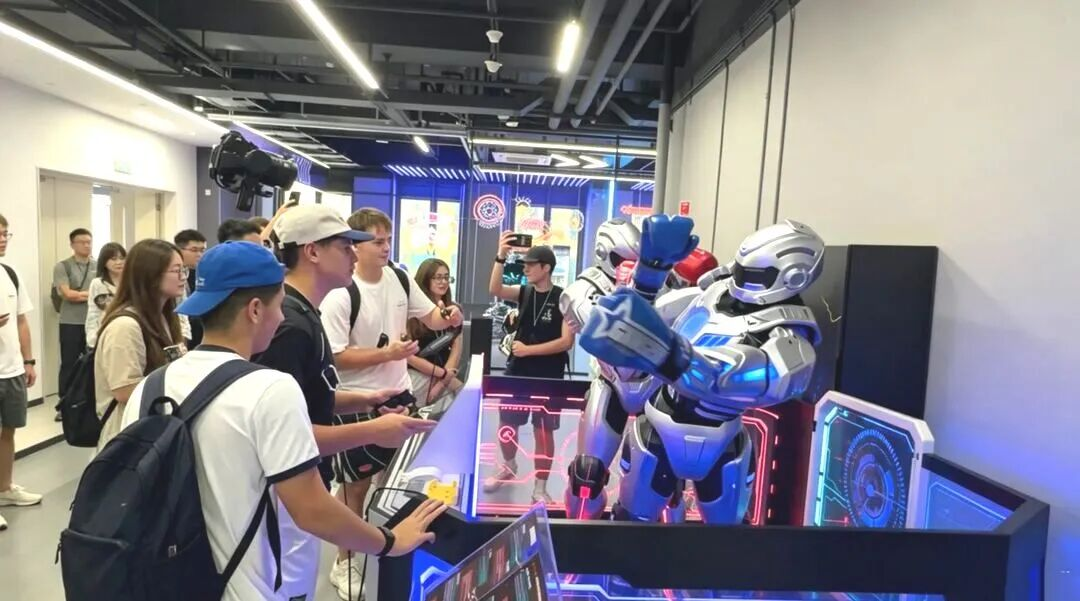
At the Robot World in Beijing E-Town, young visitors from New Zealand got a firsthand glimpse of China’s cutting-edge technology.
From “steel athletes” capable of completing a half marathon to “home assistants” that neatly fold garments with precision, the wide range of skills demonstrated by the robots left visitors dazzled. Even more impressive was the solid progress behind these products, reflecting China’s manufacturing sector’s transition from “traditional manufacturing” to “intelligent manufacturing.”
After settling into a Xiaomi vehicle, Danny da Fonseca, a student from New Zealand, could barely contain his excitement. The intelligent voice system instantly processed his English commands, while the central control panel showed a smooth and responsive interface. “This is just so cool! Amazing!” he exclaimed.
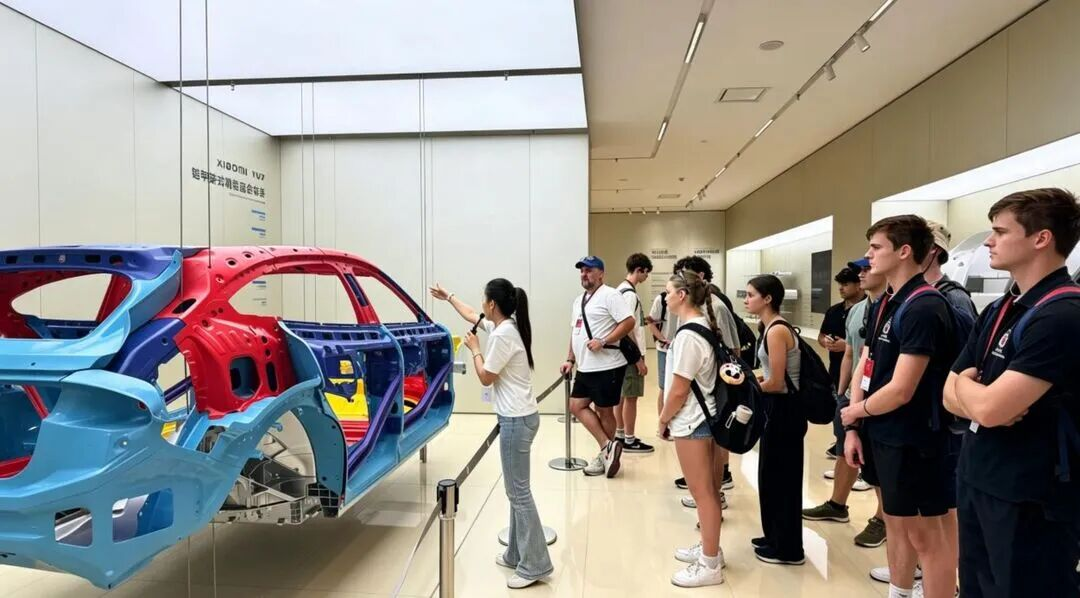
At the Beijing High-Level Autonomous Driving Demonstration Zone, the young participants experienced the latest applications of autonomous driving technology firsthand. The real-world use cases of artificial intelligence in daily life and education greatly broadened their horizons. At the SoReal Science Fiction Paradise in Shougang Park, the immersive experiences enabled by VR and AR technologies left them reluctant to leave.
From the robotics industry to intelligent vehicles, and from artificial intelligence to the metaverse, the comprehensive tech-themed visits showcased to New Zealand youth the fruitful achievements of the Beijing-Tianjin-Hebei international technological innovation center, and highlighted the strong momentum of China’s frontier fields.
Visiting the CPPCC: Experiencing the Unique Charm of “Chinese-style Consultation”
At the office of the Beijing Municipal Committee of the CPPCC, the young people from New Zealand took part in a special study visit.
Inside the Standing Committee meeting hall, the young visitors learned about the history and functions of the CPPCC, as well as how it conducts consultation and deliberation on state affairs. “So this is how political consultation works in China,” said Januka Fernando, voicing what is on the mind of the 22 young leaders in the delegation. Through detailed briefings on the system and vivid presentations of how the CPPCC performs its duties, the immersive visit gave the young participants a deeper understanding of the distinctive appeal of “Chinese-style consultation”.
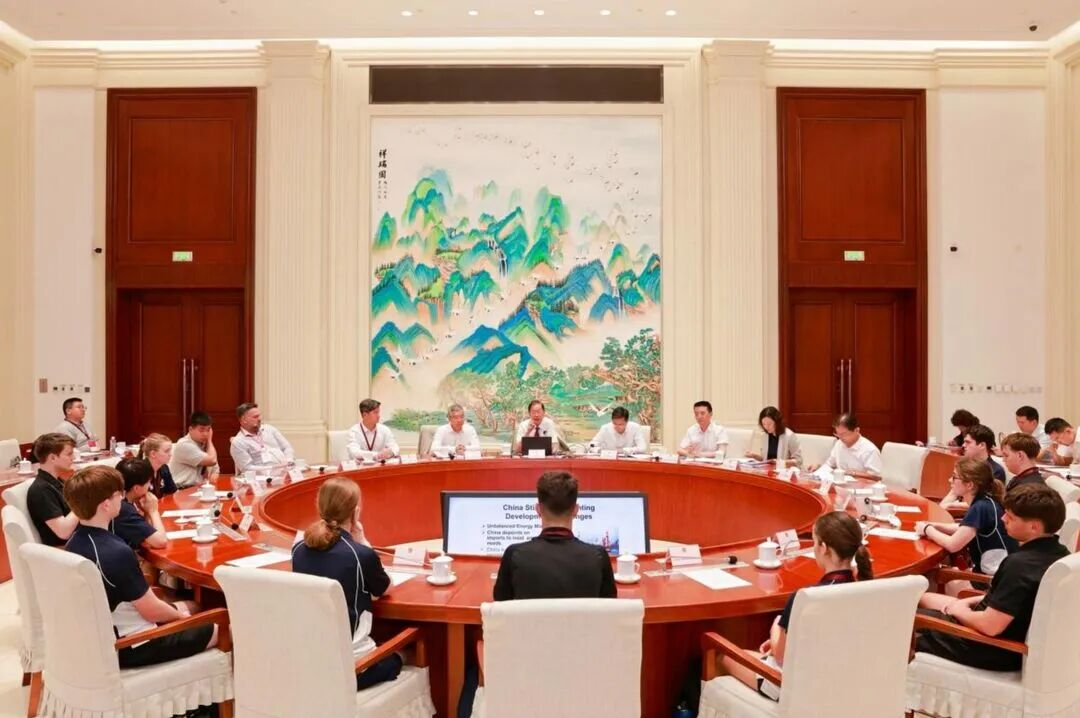
“If young people want to submit proposals, what are the available channels?” James Grant asked. A staff member told him that CPPCC members come from all walks of life, including many young representatives. Through various channels such as field research, seminars and online platforms, they can collect public input and develop it into formal proposals. James Grant remarked, “This is not a closed-door meeting; it is a process in which everyone can have a voice.” Catherine Nichols beamed, “Then sitting here today also counts as a special form of ‘participation’ for us.” Following her comments, light laughter filled the meeting room.
At the “China-New Zealand Friendship: Passed on from Generation to Generation” exchange meeting, Chen Mingming, former Chinese Ambassador to New Zealand and Sweden, gave a presentation titled “Understanding China”. He reviewed the history of exchanges between the two countries and encouraged young people to carry forward the friendship. The young participants from New Zealand listened attentively and raised questions enthusiastically, gaining a deeper understanding of bilateral relations.
Visiting the Embassy: Sowing the Seeds of Friendship
A visit to the Embassy of New Zealand in China was a special stop on the journey. When these young visitors entered the embassy of their own country, welcomed as the guests of honor in a diplomatic setting, a profound sense of identity quietly took hold. They were no longer merely students visiting from afar, but young ambassadors for people-to-people exchanges entrusted with a special mission.
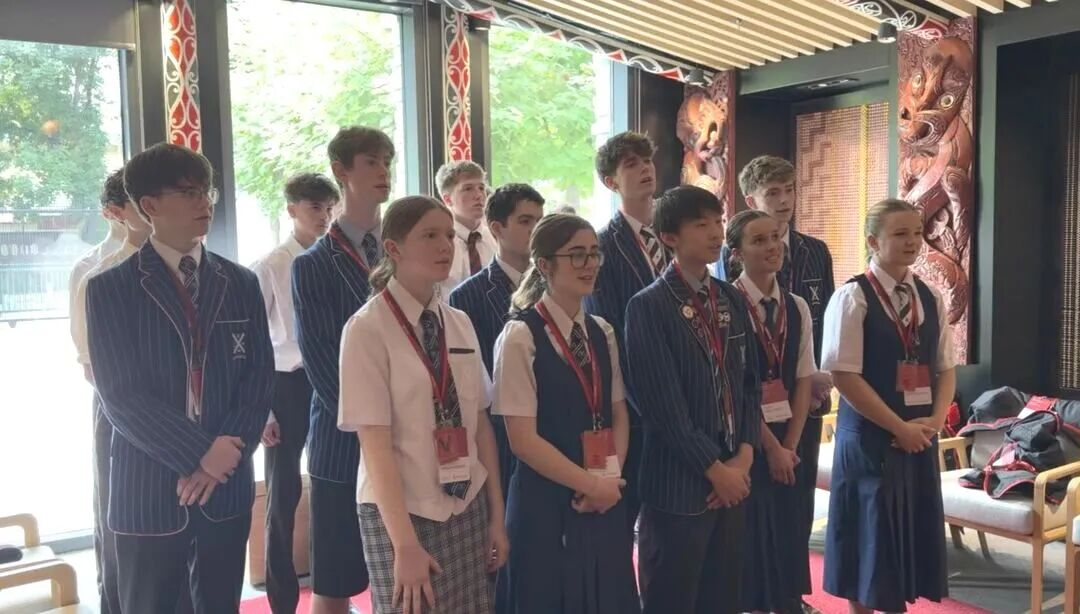
Jonathan Austin, New Zealand’s Ambassador to China, hosted and addressed the welcome reception, and Commercial Counsellor Svar Barrington introduced the embassy’s main mandate and functions. Later, the students gave an impromptu performance of the Māori haka. As the stirring rhythm intertwined with thunderous applause, the spirit of the South Pacific nation reverberated through the embassy’s halls. It was at such moments that seeds of people-to-people exchanges were quietly sown.
“I want to share what I have seen, heard and felt here with more people back home. Friendship is not a one-off thing. It takes ongoing effort to sustain and renew it. I hope I can contribute to that,” Samuel Hu told reporters.
Mutual Learning Among Civilizations: Between Tradition and Modernity
“What makes the Temple of Heaven, hailed as an architectural masterpiece, so extraordinary?” Driven by curiosity, the young New Zealanders visited the Temple of Heaven.
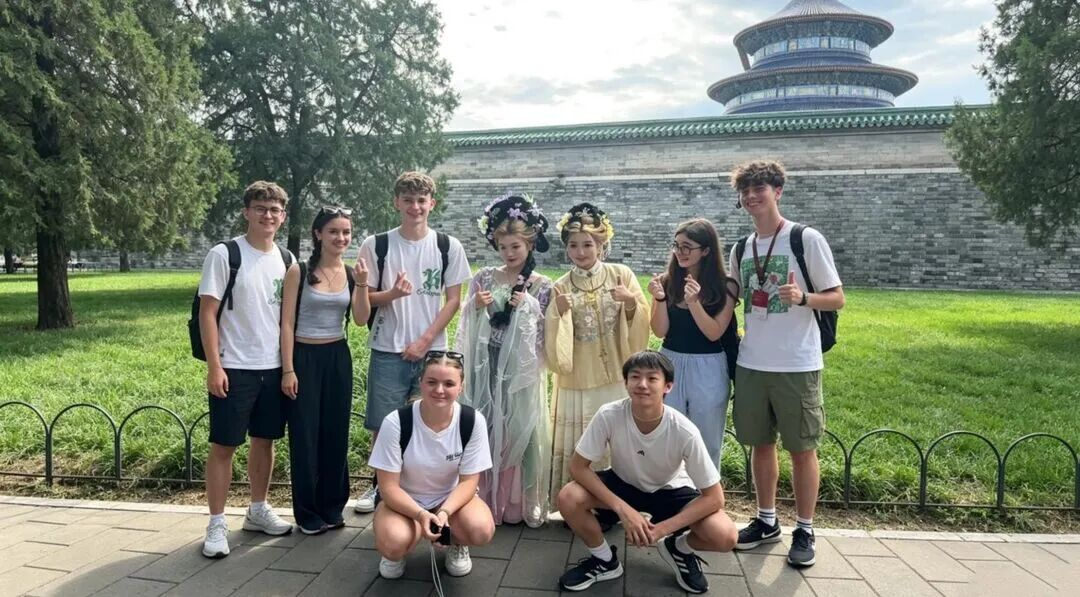
There, they looked up at the tiled roof of the Hall of Prayer for Good Harvests, getting a glimpse into the 600-year history of the building complex. Gazing at the upturned eaves and bracket sets, they felt the grandeur of Chinese culture and the ingenuity of its architectural aesthetics. When they came across several students dressed in Ming Dynasty Hanfu in the corridor, Noah Miller asked, “May I take a photo with you?” The girls nodded with a smile. When posing for the photo, the young people spontaneously gave the “thumbs-up” gesture popular among youth.
After immersing themselves in the beauty of the Temple of Heaven, the young visitors went to Lu He High School for a youth dialogue with a renewed sense of Chinese culture.
At Lu He High School, the participants and their Chinese peers sat together in the century-old music hall. These young people from different cultural backgrounds engaged in discussions ranging from climate change to artificial intelligence, sharing with each other their perspectives on the world. “Through this event, what we are taking back to the Southern Hemisphere is not only the memory of an unforgettable journey, but also an understanding of an open and inclusive China that we discovered through dialogue with its young people,” said Allegra Voice.
As the ten-day journey drew to a close, a special ceremony was held at the farewell dinner. The students picked up their paintbrushes once again and, following the pairings formed during the ice-breaking activity on the first day, drew another picture of “China in My Eyes.”
Ten days earlier, when they arrived in Beijing, most of their drawings featured dragons, lanterns and palace walls—a China they imagined based on what they learned from books and the media. This time, however, their drawings included the winding Great Wall and the golden Hall of Prayer for Good Harvests, Peking Opera masks and adorable giant pandas, Xiaomi’s futuristic smart factory, as well as heartwarming scenes of making dumplings with their Chinese friends. From symbols to stories, from vagueness to specificity, and from “imagining China” to “seeing China,” the contrast between the drawings reflected a journey of understanding across continents.
An official from Beijing NGO said that young people’s understanding of China should not be confined to books and screens. Instead, bridges for exchange should be built through sincere face-to-face interactions, enabling young people from different cultural backgrounds to understand one another through firsthand experience. It is hoped that Chinese and foreign youth, bound by a shared youthful spirit, will enhance mutual understanding, build friendship and grow together by learning from each other. By serving as friendship ambassadors for people-to-people connectivity between countries, they can contribute their youthful energy to the building of a community with a shared future for humanity.