On September 22 and 24 (local time), the documentary Hotline Beijing was screened at the Harmony Gold Theater in Hollywood, Los Angeles, and the Memor Museum in Manhattan, New York, respectively. The events were attended by Consul Generals of China in Los Angeles and New York. Also present were documentary directors, producers, and representatives from industry associations, film and television producers and distributors, Chinese associations, academic institutions, the financial sector, and cultural and artistic communities in Los Angeles and New York.
Held in Los Angeles and New York, the screenings aimed to expand the global reach of Chinese documentaries, facilitate professional exchanges between the Chinese and U.S. film industries, and enhance global understanding of China. Through the screenings of Hotline Beijing, the events used the film as a bridge to share China’s approach to urban governance with global audiences, enabling more people to experience the warmth and the governance wisdom behind Beijing’s stories. Participants from various sectors spoke highly of the film.
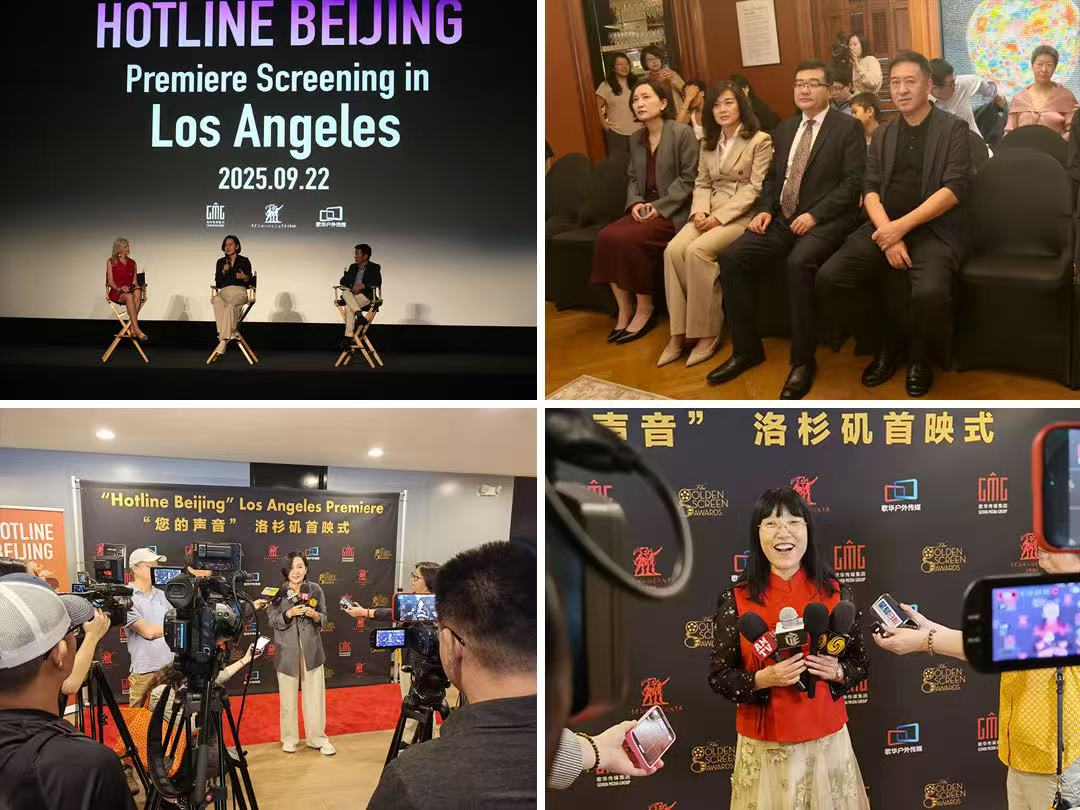
Harrison Engle, founder of the International Documentary Association (IDA) and a documentary producer and director, said in an interview, “The main thread of the film is where people can really relate. We all have housing problems, food problems, financial problems, social problems, marital problems ... all kinds of things to deal with, and the hotline tries to address all those different problems. It is such an amazing challenge for them even to imagine that they can answer, have anybody call up and try to help them solve a problem like that.”
Actor and film producer Pete Allman commented, “I think the 12345 hotline is excellent. We could learn to do that here in Los Angeles, and not just Los Angeles, but New York City, San Francisco, throughout the United States.”
John Rusnak, CEO and Founder of Visionmark Records and a film music composer, noted, “This is probably the first Chinese documentary I’ve ever watched, and it’s very well produced. The music, in particular, is outstanding.”
Robert, lead designer and photographer of Hollywood International Filmmaker magazine, remarked, “I think everyone should watch this film. It’s really cool.”
Independent filmmaker and screenwriter Shawk said, “We need more Chinese films because we haven’t seen enough. (Watching) more Chinese films can help the American cultural community better understand China.”
Zhang Xiangyu, a graduate of Columbia University, shared, “What struck me most was the subdistrict mediator’s story. He spent years helping just a few elderly residents in one building. When they were finally able to use the elevator, the look of relief on his face truly touched me.” Local documentary director Lin Chenhui said, “I think China has developed at a remarkable pace. It has put in place a very comprehensive system to help citizens address their everyday needs, which makes me feel deeply proud.” Guo Jinchen, an international student from New York University, stated, “Many young people today don’t have a clear picture of what the government is doing, and without knowing, it’s easy to develop biases. After watching this film, I feel that the government genuinely cares about us. If films like this can reach more people, our sense of happiness and security would be even stronger.” Several overseas Chinese audience members mentioned that they were originally from Beijing and had been away from home for more than 30 years. They were amazed at the city’s changes and hoped that documentaries like this could be screened in more cities around the world, helping more people gain a better understanding of today’s China.
On September 24, the Los Angeles Post published a film review titled “Hotline Beijing: A Cinematic Dialogue Between Citizens and a City”, stating, “The documentary Hotline Beijing held its Hollywood premiere in Los Angeles, marking a significant step in the international circulation of Chinese documentary cinema. More than a documentary about an administrative hotline, Hotline Beijing becomes an inquiry into the ethics of listening. Who gets heard? How can large systems sustain care at a human scale? In asking these questions, the film not only chronicles a uniquely Chinese experiment in governance but also contributes to a global cinematic conversation about the social contract in modern cities.”
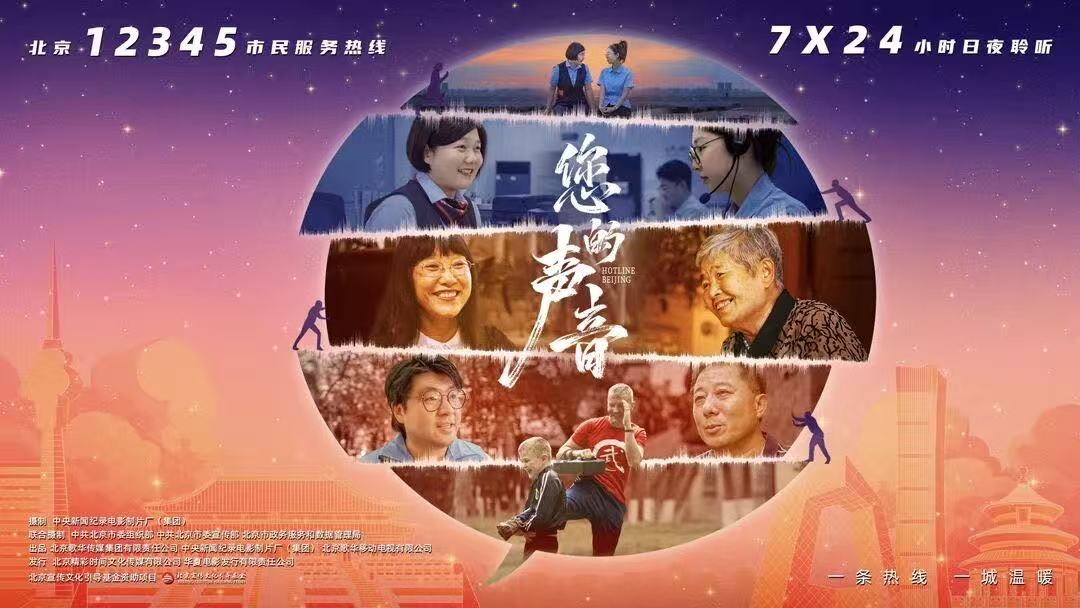
Hotline Beijing is produced by China Central Newsreel and Documentary Film Studio (Group) under China Media Group (CMG) and co-produced by the Organization Department of the CPC Beijing Municipal Committee, the Publicity Department of the CPC Beijing Municipal Committee, and the Beijing Municipal Administration of Government Services and Data Management. Focusing on the common governance challenges faced by super-large cities around the world, the film follows citizen calls to Beijing’s “12345” hotline as its narrative thread. Through real footage, people, and experiences, it vividly presents seven stories featuring the growth of hotline operators, parking shortages, the citizen satisfaction rating system and other topics. Through the lens of Beijing’s explorations in agile, resilient, proactive, and smart governance, the film offers a multidimensional portrayal of Beijing’s innovative practices in deepening “swift response to public complaints” reform and the people-centered development philosophy behind its institutional design.