As China’s “two sessions” draw global attention, the world is looking forward to the 15th Five-Year Plan. In exclusive interviews with our reporter, several ambassadors to China noted that China’s economic growth is of great significance to the global economy. As a key window for the international community to observe China’s policies and development direction, the “two sessions” have bolstered international confidence, and the 15th Five-Year Plan will bring significant new opportunities for cooperation between China and other countries.
China’s High-Quality Development Brings Opportunities for Vietnam-China Cooperation
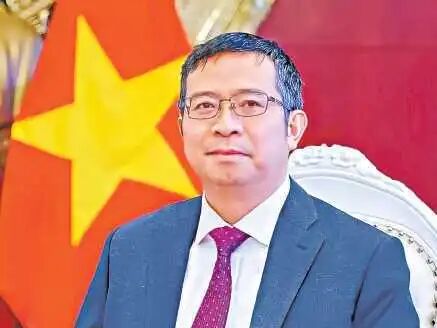
Pham Thanh Binh, Vietnamese Ambassador to China
Pham Thanh Binh, Vietnamese Ambassador to China, stated that the “two sessions” not only set various targets for 2026 but also involve the review and discussion of the draft outline of the 15th Five-Year Plan, which will chart the course for China’s medium- and long-term development. He expressed confidence that China will continue to achieve remarkable progress in high-quality development, creating new opportunities for practical cooperation between Vietnam and China. Vietnam has always regarded the development of relations with China as a top priority in its foreign policy and remains committed to building the Vietnam-China community with a shared future.
The 15th Five-Year Plan Sets the Direction for China’s Medium- and Long-Term Development
Pham stated that the annual “two sessions” are a major event in China’s political life. Chinese people put forward suggestions to the Party and the government through their elected deputies, exercising their right as masters of the country. This vividly demonstrates whole-process people’s democracy, pooling wisdom and building broadconsensus.
“This year’s ‘two sessions’ will review and approve a strategic document—the Outline of the 15th Five-Year Plan—which will set the direction for China’s medium- and long-term development,” he said. This is crucial for China in fostering a new development pattern, advancing high-quality development with innovation as the primary driver, and making solid progress in Chinese modernization.
The ambassador noted that, based on the practical needs of people from all walks of life, the strategic decisions and goals introduced at this year’s “two sessions” will lay a solid foundation for China’s new economic achievements, further reinforce the strong sense of community for the Chinese nation, and maintain long-term social stability and security.
Pham pointed out that China is a responsible major country with an important international status and the world’s second-largest economy. The relevant policies adopted at China’s “two sessions” not only release a clear signal of expanding high-standard opening up, but also contribute to the peace, stability, and prosperity in the region and globally, providing valuable experience for developing countries, including Vietnam.
China’s High-Quality Development to Bring Opportunities for Vietnam-China Cooperation
The goals, directions, and tasks of the 15th Five-Year Plan are what Pham Thanh Binh is most interested in. He stated that the content and priorities of various tasks under the 15th Five-Year Plan will clearly demonstrate the transformation of China’s economic growth model: from pursuing quantity to enhancing quality, and from reliance on factors such as capital and land to innovation-driven development.
China and Vietnam maintain close economic and trade relations, with China being Vietnam’s largest trading partner. The Report on the Work of the Government set a target GDP growth of 4.5–5% for 2026. Pham expressed his confidence that in 2026, China will continue to achieve significant results in high-quality development, with major advances in technological capabilities and new breakthroughs in deepening reforms across the board, better meeting people’s growing needs for a high-quality life. The ambassador added that China’s sustainable, stable, and high-quality development will bring numerous opportunities for the two countries to expand and improve the quality of practical cooperation. This will also contribute to consolidating the Vietnam-China comprehensive strategic cooperative partnership and accelerating the building of a Vietnam-China community with a shared future that carries strategic significance.
In recent years, relations between the two Parties and the two countries have enjoyed healthy and stable development, with increasingly close cooperation in various fields attracting global attention. “To further promote major breakthroughs in bilateral relations, we suggest that both sides focus on strengthening cooperation in several areas,” said Pham. First, continue to enhance political mutual trust and fully and effectively implement the agreements and consensus reached by the top leaders of both Parties and countries. Second, on the basis of strategic mutual trust, further strengthen and deepen practical cooperation in the field of national defense and security to expand shared interests and maintain peace and stability in both countries, the region, and the world. Third, strengthen practical cooperation to achieve new breakthroughs in areas where both sides have strengths and needs. This involves promoting trade balance and high-quality investment while strengthening the connectivity of strategic infrastructure to bring tangible benefits to the people and enterprises of both nations. Fourth, expand cooperation in fields such as science and technology, education, healthcare, culture, and tourism. We should also actively carry out people-to-people exchanges to solidify the public support and lay the foundation for the comprehensive and sustainable development of Vietnam-China relations.
“Red Study Tours” Leave a Deep Impression
Pham has worked and studied in China for many years and speaks fluent Mandarin. Before assuming his post as Vietnamese Ambassador to China in January 2025, he served as Vietnam’s Deputy Minister of Foreign Affairs, among other positions.
China and Vietnam are connected by mountains and rivers and enjoy cultural proximity. The two countries have witnessed booming people-to-people exchanges in recent years. Pham noted that, in 2025, under the framework of the Vietnam-China Year of People-to-People Exchanges, the two sides organized a variety of exchange activities, strengthening public support for bilateral relations. He specifically mentioned that the “Red Study Tours” left a profound impression, which helped cultivate revolutionary ideals among the youth of both countries and enhance their understanding of the traditional friendship between Vietnam and China.
Cultural and audiovisual works have also been a highlight of people-to-people exchanges between the two countries. Pham noted that TV series based on Chinese classics, such as Journey to the West and Dream of the Red Chamber, have long been familiar to generations of Vietnamese audiences. Many Chinese songs are widely popular in Vietnam and have been covered in Vietnamese. With the development of social media, an increasing number of Chinese people, especially the youth, have shown a keen interest in Vietnamese works, such as the films Furie and Once Upon a Love Story, as well as songs like See Tình and De Den De Di that have gone viral on Douyin and Xiaohongshu.
“Looking ahead, I believe that both sides will continue to organize various friendly exchange activities and mutual visits by delegations under the framework of high-level engagements, particularly the ‘Red Study Tours’,” said Pham. He added that the two countries will also strongly support local governments, especially those in border provinces, in strengthening friendly cooperation. Efforts will be made to enhance interactions between the two peoples, especially between the youths, in bilateral and multilateral cultural and people-to-people exchanges. These initiatives aim to expand and deepen such exchanges, thus contributing to the Vietnam-China comprehensive strategic cooperative partnership and advancing the building of a Vietnam-China community with a shared future that carries strategic significance.
Decisions of the “Two Sessions” Hold Great Practical Significance for Kazakhstan
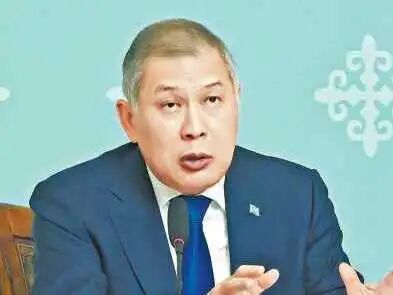
Shakhrat Nuryshev, Ambassador of Kazakhstan to China
Shakhrat Nuryshev, Ambassador of Kazakhstan to China, stated that the decisions of the “two sessions” carry great practical significance to Kazakhstan, a permanent comprehensive strategic partner of China. He noted that Kazakhstan pays close attention to the sessions. The 15th Five-Year Plan reflects China’s new development directions and major trends, indicating more opportunities for cooperation. By drawing on the development experience of various regions in China, Kazakhstan aims to achieve new results in pragmatic cooperation.
Deeply Impressed by Rigorous Organization and In-Depth Discussions
“We have been paying close attention to this year’s ‘two sessions’. The “two sessions” have always determined the strategic direction of China’s development and the measures to improve people’s well-being,” said Nuryshev. He noted that the decisions made during the “two sessions” hold great practical significance for Kazakhstan, as they establish a broad framework for bilateral economic cooperation, infrastructure project alignment, and regional collaboration.
Ambassador Nuryshev focused on issues including China’s economic growth, high-tech development, digital economy, green transition, and the development of western regions. He stated that China’s measures to further expand opening up and advance the Belt and Road Initiative (BRI) are also of great significance.
This year marks the fourth year of Nuryshev’s second term as Ambassador to China. Having attended the “two sessions” many times, he expressed his deep impression of the highly rigorous organization, discipline, and depth of discussion. What is particularly noteworthy is the connection between strategic decisions and the actual tasks in various regions, as well as the vision for long-term planning, he added.
As Kazakhstan advances its constitutional reform and plans a national referendum on the new draft constitution on March 15, Ambassador Nuryshev said that Kazakhstan views this stage as an important continuation of efforts to consolidate the national governance system, expand citizen participation in decision-making, and build a more open and responsible political system. While the modernization processes of China and Kazakhstan have their own unique characteristics, both countries are committed to building a sustainable development system and continuously raising the quality of life for their people.
The 15th Five-Year Plan Outlines China’s Policy Direction
The upcoming review and discussion of the draft outline of the 15th Five-Year Plan during the “two sessions” have drawn wide attention. Nuryshev stated that the recommendations for formulating the 15th Five-Year Plan, deliberated and adopted at the Fourth Plenary Session of the 20th CPC Central Committee, generally provide a clear outline of China’s policy direction in terms of high-standard opening up and comprehensively deepening reforms. He noted that this reflects China’s transition toward a new model of international integration—one that focuses not only on participating in global markets but also on contributing to the formulation of new global rules.
“In the past, people understood China’s opening up to the outside world as attracting foreign investment into manufacturing and technology sectors and expanding commodity exports. However, China is gradually transforming from ‘the world’s factory’ to ‘the world’s market’.” He added that China is now shifting its focus in international trade from tariff barriers to regulatory rules.
The ambassador expressed that Kazakhstan is willing to actively support China’s initiatives to promote mutual openness, develop bilateral and multilateral trade, expand investment cooperation, and jointly promote high-quality cooperation under the framework of the BRI.
Nuryshev stated that China remains one of the largest trade and investment partners of Kazakhstan. In 2025, bilateral trade volume reached USD 48.7 billion, a year-on-year increase of 11%, while rail freight volume hit 35.6 million tonnes, up 11.1% year-on-year, both reaching record highs. He expressed confidence that in 2026, bilateral trade will continue to reach new milestones, steadily advancing toward the goal of doubling the trade volume set by the two heads of state. In the first three quarters of 2025, China’s direct investment in Kazakhstan reached USD 2.6 billion, representing a year-on-year growth of over 262%. Kazakhstan welcomes the systematic growth of China’s long-term investment in its economy and the creation of high-value-added products.
People-to-people exchanges between the two countries have also continued to deepen. He cited examples such as the inauguration of the Kazakhstan Cultural Center in Beijing last September. Additionally, more than 6,000 Kazakh students are studying at Chinese universities, while over 3,000 Chinese students are enrolled in universities in Kazakhstan. Following the “China Tourism Year” in Kazakhstan last year, this year’s “Kazakhstan-China Year of Cultural Exchange” is highly anticipated.
Witnessing Profound Changes Over 20-Plus Years in China
As a senior diplomat, Nuryshev has spent more than two decades in China. He noted that he has witnessed China’s development at different stages, the changes taking place in various regions, and the gradual improvement of people’s living standards.
Since assuming office as the Ambassador to China once again, Nuryshev has visited major cities across the country, including Urumqi and Kunming in the western regions, as well as cities in relatively remote areas such as Xizang and Qinghai. In his eyes, every city showcases the multi-layered and diverse nature of contemporary China in its own way.
“What impresses me most is that China’s development is tangible at every level. This is reflected in urban planning, including convenient transportation, clean and tidy streets, well-designed public spaces, convenient services, and a focus on the comfort of families, the elderly, and all residents.” He said in many places, it is evident that urban infrastructure is truly built around the people. Many changes are directly reflected in the daily lives of residents, from the ways of traveling and access to public services, to the organization of urban spaces. The digital solutions and artificial intelligence (AI) have made greater convenience a daily norm in many areas of life.
The ambassador added that China’s measures to improve people’s livelihood demonstrate a high degree of systematic planning and long-term vision. Over the past few decades, China has made remarkable achievements in poverty reduction, the building of a moderately prosperous society, infrastructure development, and the modernization of its education and healthcare systems.
“Kazakhstan is actively studying the development experience of various regions and provinces in China,” Nuryshev said. He noted that 2025 marked the most dynamic year of exchanges between the two countries, with officials from nearly all regions of Kazakhstan visiting China and its relevant provinces to learn from their experience. This will undoubtedly foster new outcomes in practical cooperation between Kazakhstan and China in the years ahead.
China’s Four Global Initiatives Align with Morocco’s Vision

Abdelkader El Ansari, Moroccan Ambassador to China
Abdelkader El Ansari, Moroccan Ambassador to China, stated that Morocco is closely following the proceedings of China’s “two sessions” and the country’s economic developments, looking forward to benefiting from the outcomes. He noted that there is still immense potential for bilateral relations. Morocco supports the four global initiatives proposed by China and stands ready to promote China-Arab and China-Africa relations. He added that he and his family greatly enjoy life in Beijing, and he hopes to facilitate more youth exchanges between the two countries to further strengthen their friendship.
China’s Economic Growth Expected to Benefit Morocco and Bilateral Cooperation
“The ‘two sessions’ represent an important political gathering in China. We have been closely following the announcements and reports released during this period to gain deeper insights into the operations of Chinese institutions and their policies,” stated Ansari. He noted that China, as the world’s second-largest economy, attracts close attention from observers around the world during the “two sessions”. With the launch of the 15th Five-Year Plan, China’s domestic situation, particularly its economic performance, will inevitably impact its relations with countries worldwide. Morocco expects that China’s economic growth will deliver tangible positive effects on its economy and the bilateral economic and trade relations.
Ansari emphasized that political and diplomatic ties, economic cooperation, and culture and people-to-people exchanges constitute the three pillars of the Morocco-China strategic partnership, with the economic cooperation being of paramount importance. Morocco is committed to strengthening and deepening economic ties with China and attracting more Chinese investment. Morocco is well-positioned to serve as a key partner for China, supported by its strategic geographic location, political stability, a range of preferential policies for foreign investors and partners, a skilled workforce, and a strong talent pool.
In recent years, Chinese enterprises have shown growing enthusiasm for investing in Morocco, with committed investment exceeding USD 10 billion. In 2025, bilateral trade between the two countries also reached a record high, surpassing USD 10 billion. Ansari said that there remains immense potential for bilateral relations, which can be further tapped, refined, and innovated to reach new heights as envisioned by both sides, thereby serving the common interests of both governments and business communities.
Willing to Support China in Deepening China-Arab and China-Africa Relations
On February 27, China held the inaugural meeting of the Group of Friends of Global Governance at the Palais des Nations in Geneva, Switzerland. Representatives from nearly 60 countries, including the 42 founding member states of the Group of Friends, attended the meeting, with the Moroccan representative among them.
Ansari said that Morocco has consistently supported the four global initiatives proposed by China, namely the Global Development Initiative, the Global Security Initiative, the Global Civilization Initiative, and the Global Governance Initiative proposed last year. These initiatives largely align with those proposed by Morocco, sharing similar benchmarks and contributing to peace in Africa and the development of the African continent. There is every reason for both sides to engage in cooperation, discussion, and coordination at the diplomatic level to realize these visions and goals.
Situated at the northwestern tip of Africa, Morocco is a transportation hub connecting Europe, the Middle East, and Africa. Ansari noted that Morocco’s Constitution explicitly affirms its belonging to the Arab world and the African continent, and the country also serves as a bridge linking the two regions in terms of economy, trade, and culture. Morocco hopes to deepen cooperation with China to further strengthen China-Arab and China-Africa relations. This year, China will host the second China-Arab States Summit, and Morocco pledges to actively participate in this grand event. Morocco pursues a robust African policy, with Africa being the primary focus of its foreign policy. It hopes to work with China to foster closer, deeper, and more diversified ties in economic, cultural, and people-to-people exchanges between China and Africa.
“We have already taken many actions and continued to hold talks with the Chinese side to explore how to leverage Morocco’s capabilities, resources, and diplomatic strengths to better promote the ties between China—a friendly major country—and the Arab world and the African continent,” Ansari said.
Enjoying Life in the Beautiful City of Beijing
Ansari has been stationed in China for two years. During this time, he has engaged in public activities with great energy to introduce Morocco to the Chinese people and promote friendly cooperation between the two countries.
“My family and I are very happy. We feel honored to live in this metropolis and greatly enjoy our life here,” said Ansari. In his eyes, Beijing is above all a city rich in historical heritage, offering numerous opportunities to understand, appreciate, and experience China’s long-standing history. At the same time, Beijing’s convenient transportation and advanced digital infrastructure make daily life highly efficient.
He also noted that Beijing is an appealing city for tourists. Over the past two years, they have hosted many friends, families, and visitors from Morocco and other countries, all of whom have spoken highly of this beautiful city. They also deeply appreciate Beijing’s efforts in controlling pollution, improving the urban environment, and enhancing citizens’ quality of life.
“We are also exploring other Chinese cities. As I often say, China is a vast country with a large population and many large cities, all of which are very interesting and home to numerous historical sites and cultural attractions,” Ansari said. He noted that he strives to spare time to visit various provinces across China, meet with local officials and business representatives, and hold meetings on economic and cultural cooperation, so as to fulfill his official duties as well as appreciate the unique charm of different regions.
Ansari stated that Morocco and China maintain friendly relations, both boasting long histories and splendid civilizations. Both sides are working to enhance young people’s understanding of each other’s culture, customs, and history through various activities, including tourism, inter-party exchanges, and student exchange programs.
Chinese citizens do not need a visa to enter Morocco, and direct flights from Beijing and Shanghai to Morocco were launched last year. Ansari noted that as more and more Chinese tourists are visiting Morocco, he hopes China can also simplify visa procedures for Moroccan youth and tourists and that more Chinese cities can open direct flights to Morocco. He emphasized that youth exchange is the best way to build relationships based on friendship and mutual respect.
The “Two Sessions” Convey Messages of Stability and Confidence to China and the World

Sinisa Berjan, Ambassador of Bosnia and Herzegovina to China
Sinisa Berjan, Ambassador of Bosnia and Herzegovina to China, stated that the “two sessions” demonstrate China’s long-term planning and policy continuity, conveying messages of stability and confidence to both China and the world. Amid intensifying geopolitical turbulence, Chinese initiatives, such as the Global Governance Initiative, provide valuable perspectives for addressing global challenges. Beijing, as well as China more broadly, continues to develop rapidly, with visible progress since he assumed his post in 2023.
China’s Predictability and Planning Are Highly Valued
Berjan stated that since assuming his role as Ambassador to China, he has recognized that long-term planning and policy continuity are crucial to China’s development. The “two sessions” are an integral part of this continuity, setting the course for the coming year while also conveying messages of stability and confidence both domestically and internationally.
“The outcomes of the ‘two sessions’ will help us better understand China’s future priorities and key areas of development. In today’s world fraught with uncertainty and volatility, such predictability and structured planning are highly valued by many countries,” said Berjan. During this year’s “two sessions”, he paid particular attention to China’s continued focus on topics such as innovation, high-quality development, and green transition, noting that the progress in these areas has become more concrete and tangible each year.
For instance, he mentioned that living in Beijing, one can clearly feel such changes. The rapid development of electric vehicles, the widespread application of renewable energy, and the integration of digital services into daily life are all clear indicators of the structural changes currently underway in China.
Regarding the economic growth target of 4.5% to 5% outlined in this year’s Report on the Work of the Government, Berjan stated that he remains fully confident in the prospects of the Chinese economy, as China has repeatedly demonstrated its ability to address both domestic and external challenges. He is particularly impressed by the shift in China’s development focus from merely pursuing the pace of growth to placing greater emphasis on quality, innovation, and sustainable development.
“The steady growth of the Chinese economy is vital not only to the country itself but also to the global economy. A major economy with stable growth and a clear strategic direction will make a significant contribution to international confidence and stability,” Berjan said.
This year marks the beginning of China’s 15th Five-Year Plan period. Berjan believes that the 15th Five-Year Plan represents another significant milestone in China’s ongoing pursuit of modernization, digital transition, and sustainable development, while also creating new opportunities for cooperation with countries such as Bosnia and Herzegovina. He noted that Bosnia and Herzegovina possesses immense hydropower potential and is vigorously developing clean energy, while China is a global leader in renewable energy technologies, offering ample room for expanding bilateral cooperation. In the fields of infrastructure and the digital economy, Bosnia and Herzegovina and the wider Southeast European region look forward to benefiting from stronger cooperation with China.
Chinese Initiatives Provide Important Perspectives for Addressing Global Challenges
In recent years, escalating geopolitical turbulence has led to serious disorder in the global governance system. Last September, China proposed the Global Governance Initiative, following three major initiatives, including the Global Development Initiative, which have attracted much attention. Berjan stated that these initiatives, which place development, dialogue, and mutual respect at the core of international cooperation, deserve close attention, and that China’s various initiatives provide important perspectives for the international community to address shared global challenges.
The ambassador noted that Bosnia and Herzegovina, having suffered from the ravages of war, deeply understands the value of peace and stability. For the country, the importance of dialogue and cooperation is not an abstract concept but a reality rooted in its own history. For this reason, Bosnia and Herzegovina firmly supports multilateralism and the resolution of differences through dialogue rather than confrontation.
“Given the complexity of global governance, no single country or initiative can offer all the answers. The direction of international cooperation is crucial. Initiatives that promote development, security, and cultural understanding can reduce misunderstandings and polarization. Efforts that encourage dialogue, cooperation, and mutual respect can play a constructive role in maintaining peace, stability, and common development,” said Berjan.
Positive Changes in Beijing Are Clearly Evident
China is Bosnia and Herzegovina’s largest trading partner in Asia. Under the frameworks of high-quality Belt and Road cooperation and the Cooperation between China and Central and Eastern European Countries (China-CEEC Cooperation), the two countries have achieved fruitful results in economic and trade cooperation.
Berjan noted that, building on steady progress in infrastructure and energy cooperation, there are also immense opportunities for cooperation between Bosnia and Herzegovina and China in fields such as tourism, agriculture, and digital trade. Bosnia and Herzegovina has high-quality agricultural products and a growing tourism industry, and both countries hope to further strengthen these ties. In his view, a partnership needs to be balanced and diversified enough to ensure long-term resilience.
Having served as Ambassador to China for nearly three years, Berjan said his experience of living and working in Beijing has been very pleasant. He has been able to observe China’s development up close and feel the vitality of Chinese society better.
“Environmental improvement is clearly visible. When I first arrived, Beijing’s air quality and green spaces had already improved significantly. Even so, after living here for nearly three years, I can still see further positive changes,” Berjan said. He noted that Beijing is greener than it was three years ago, with a greater emphasis on increasing the use of clean energy and enhancing the city’s livability.
He mentioned that the rapid development of Beijing’s digital economy is also remarkable. From mobile payments to smart public services, daily life here is extremely convenient. Digital technology has improved efficiency to an impressive level. He has also witnessed significant advances in AI and sci-tech innovation, clearly visible in daily life, business, and public services.
“Living in China during this period of transformation has allowed me to observe a society that is constantly evolving while maintaining a strong sense of cultural identity. This combination makes China a dynamic and appealing place to live and work,” Berjan said.