The 2026 Belt and Road Trade and Investment Forum was held in Beijing on the afternoon of June 23. Heads of chambers of commerce and industry associations attending the forum said that continued efforts are needed to cultivate the fertile ground for economic and trade cooperation under the Belt and Road Initiative (BRI), tap cooperation potential in fields such as green development, artificial intelligence, and the digital economy, identify converging interests, and deliver more fruitful outcomes of win-win cooperation.
At the forum, heads of chambers of commerce and industry associations from China, Laos, the United Kingdom, Malaysia, Thailand and other countries said that Belt and Road cooperation has evolved into the world’s largest, most far-reaching, and most influential platform for international economic cooperation.
Nearly half of the exhibitors across four editions of the China International Supply Chain Expo (CISCE) are from Belt and Road partner countries. Relevant enterprises have carried out industrial chain cooperation in fields such as green development, digital economy, and health, translating a number of cooperation projects from blueprint into reality. In the first four months of this year, China’s trade in goods with Belt and Road partner countries reached RMB 8.28 trillion, up 13.5% year on year, accounting for 51% of China’s total trade.
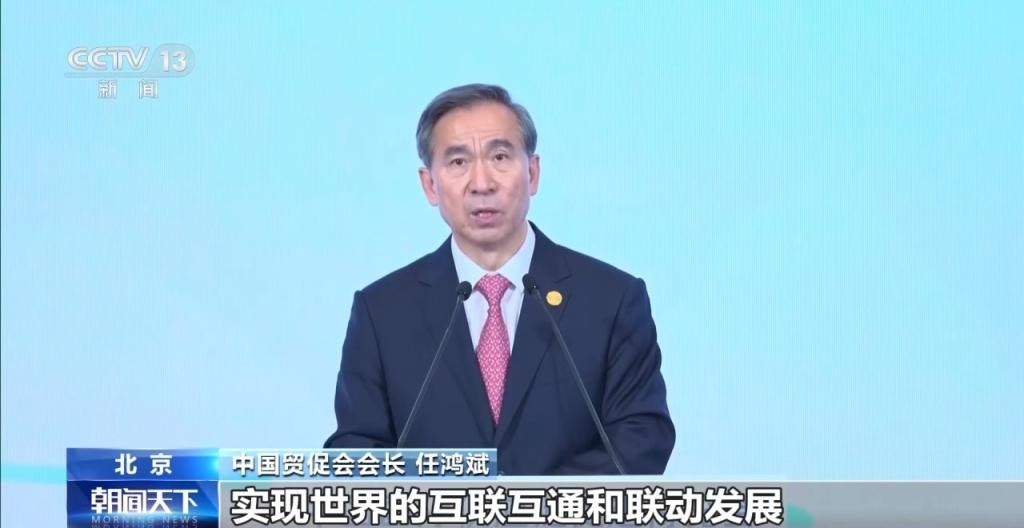
Ren Hongbin, Chairman of the China Council for the Promotion of International Trade (CCPIT) said that Belt and Road cooperation is committed to promoting connectivity and interconnected development across the world, facilitating the orderly and free flow of economic factors, efficient allocation of resources, and deep integration of markets, and enhancing the overall standing of participating countries in global industrial, supply, and value chains.
Guests attending the forum pointed out that amid severe challenges facing the multilateral trading system, Belt and Road partner countries have carried out mutually beneficial international cooperation, sending a positive signal of solidarity, cooperation, and win-win outcomes, while their influence and voice in global economic governance continue to rise. The CISCE has also provided the global business community with more opportunities for exchange and cooperation.

Vikrom Kromadit, Chairman of the Thailand-China Business Council said that he has seen the changes in China, and everyone feels that there are many areas where cooperation with China should be possible, especially in emerging technologies. He believes there will be no obstacles to future cooperation between China and ASEAN—his confidence is well over 100 percent.
Guests attending the forum stressed that platforms such as the CISCE should be fully leveraged to deepen exchanges and cooperation, expand collaboration in areas such as smart logistics, digital ports, and cross-border data flows, promote coordinated planning and collaborative growth among upstream and downstream enterprises, and advance targeted alignment of industrial and supply chains.