To Lam, General Secretary of the Communist Party of Viet Nam (CPV) Central Committee and President of Viet Nam, together with his wife Ngo Phuong Ly, paid a state visit to China from April 14 to 17. On the afternoon of April 14, Ngo Phuong Ly and her delegation visited Dashilar Commercial Street in Beijing’s Xicheng District, where they experienced the charm of traditional Chinese attire culture at the time-honored shop Ruifuxiang. Sun Haiyan, Vice Minister of the International Department of the CPC Central Committee, and Du Hongyue, Deputy Mayor of Xicheng District, accompanied the delegation during the visit.
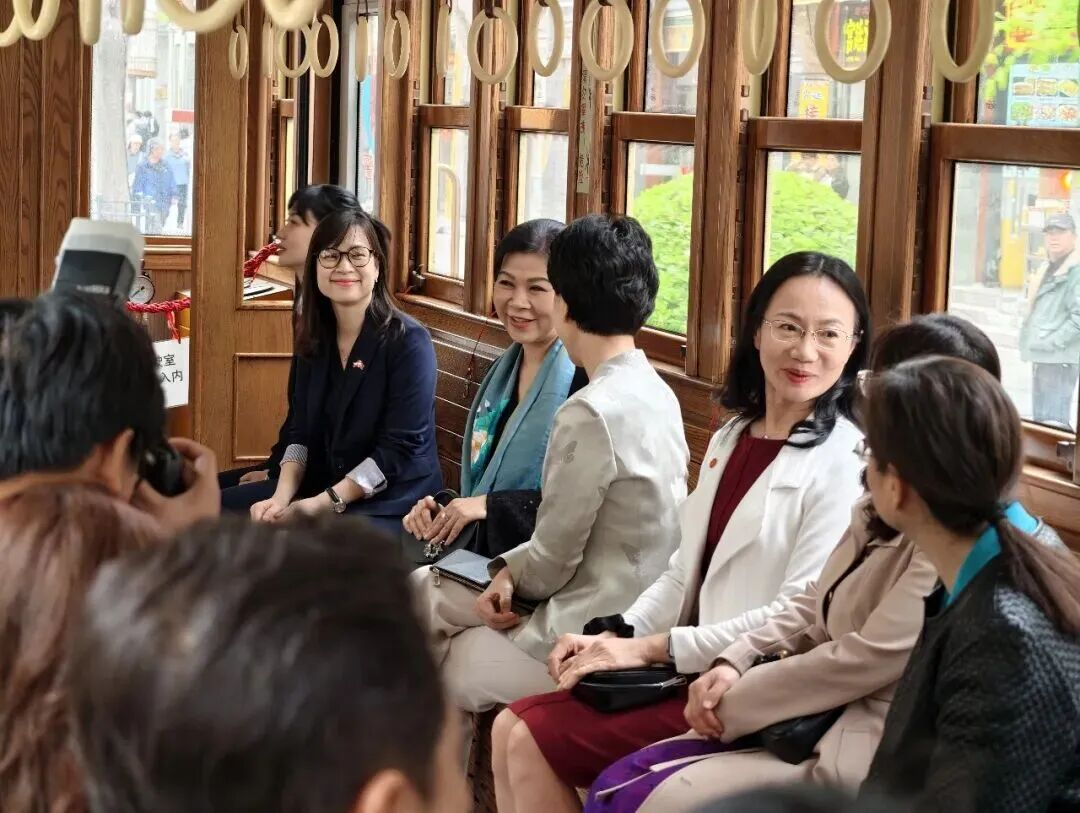
At the Wupailou Archway on Qianmen Street situated south of the majestic Zhengyangmen Archery Tower, the delegation boarded a dangdang bus for a ride along the Beijing Central Axis through the Qianmen commercial area. Along the route, they enjoyed views of quintessential traditional buildings, as well as the bustling streets alive with scenes of everyday life, gaining a vivid impression of the historical landscape and vitality of the ancient capital’s Central Axis.
Ruifuxiang’s main shop on Dashilar Commercial Street, located on the west side of the Central Axis, is still operating on its original site as a consistent and trustworthy store, with its historic appearance preserved intact for two centuries. The shop building is designed based on the philosophy of “harmonizing the square and the circle, and achieving unity between heaven, earth and humanity”. The Eastern wisdom reflected in this time-honored Chinese brand sparked heartfelt admiration from the guests.
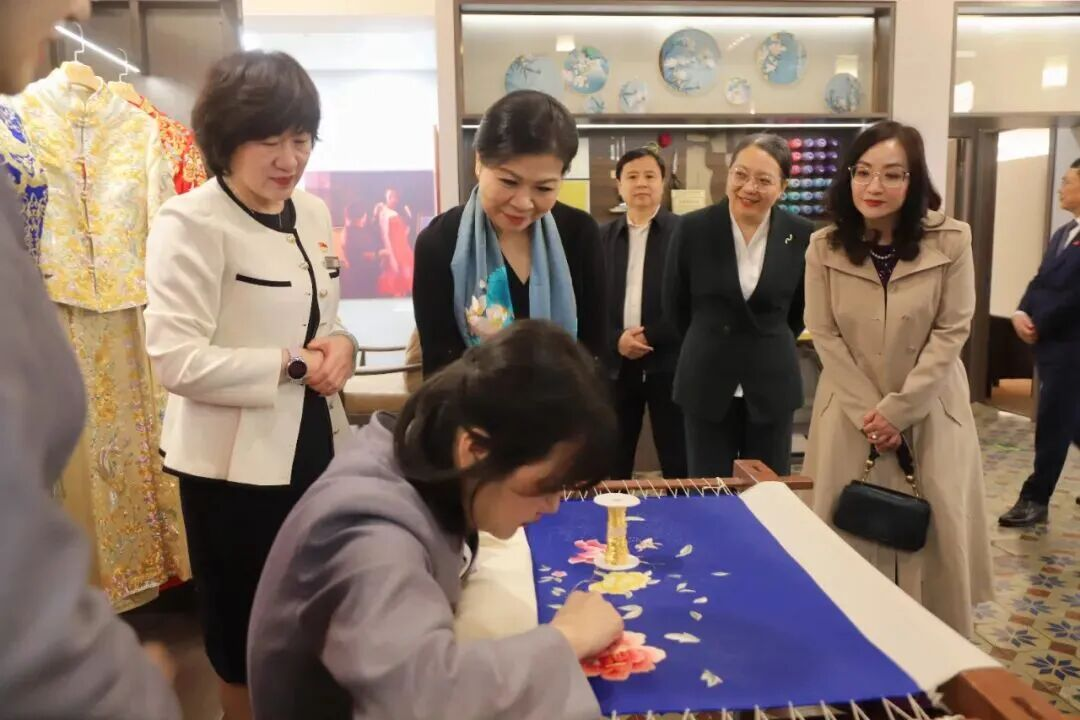
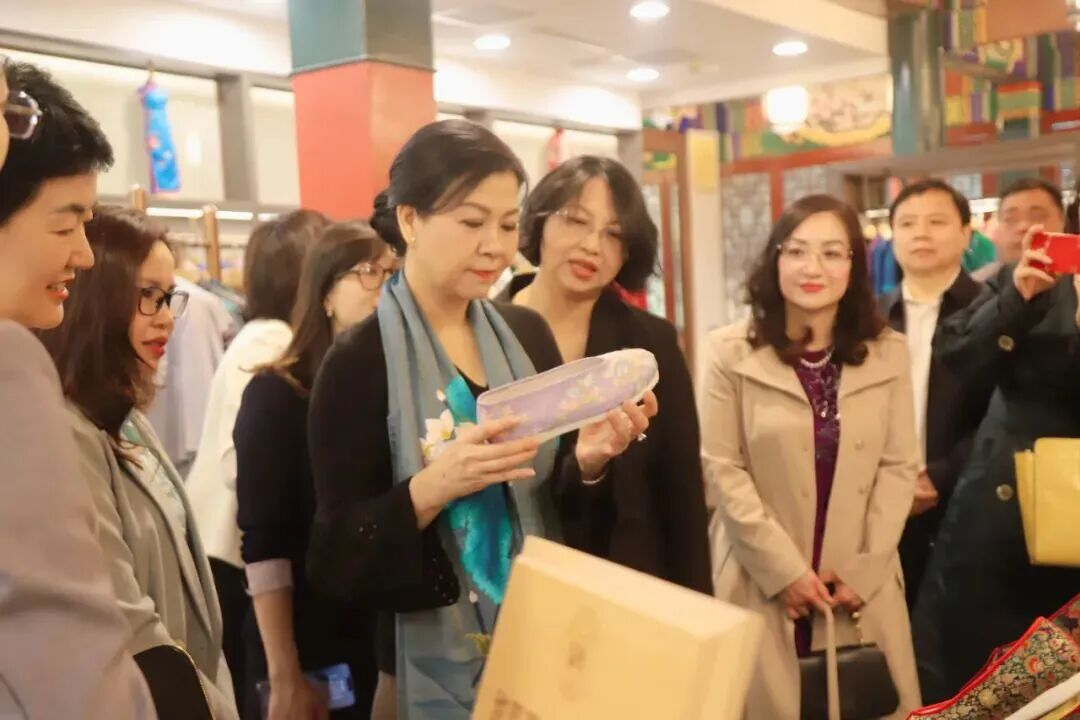
In the haute couture area on the second floor, a Panjin embroidery wedding attire showcased the essence of traditional Chinese handmade clothing craftsmanship, an intangible cultural heritage. The intangible cultural heritage masters on-site also demonstrated techniques such as Chinese frog-button making and Beijing embroidery. Also on display were the old Beijing cloth shoes from the time-honored brand Neiliansheng. The foreign guests learned about the traditional technique of making cloth shoes with multi-layered soles. The newly developed China-chic cloth shoes, designed to meet the needs of modern consumers, attracted the most attention. While viewing Beijing-style qipaos, Zhongshan suits, and neo-Chinese fashion garments, the guests showed strong interest in the integration of Ruifuxiang’s Chinese fashion designs with elements of the Vietnamese traditional Ao Dai, praising it as a conversation between Eastern aesthetic traditions across time and space.
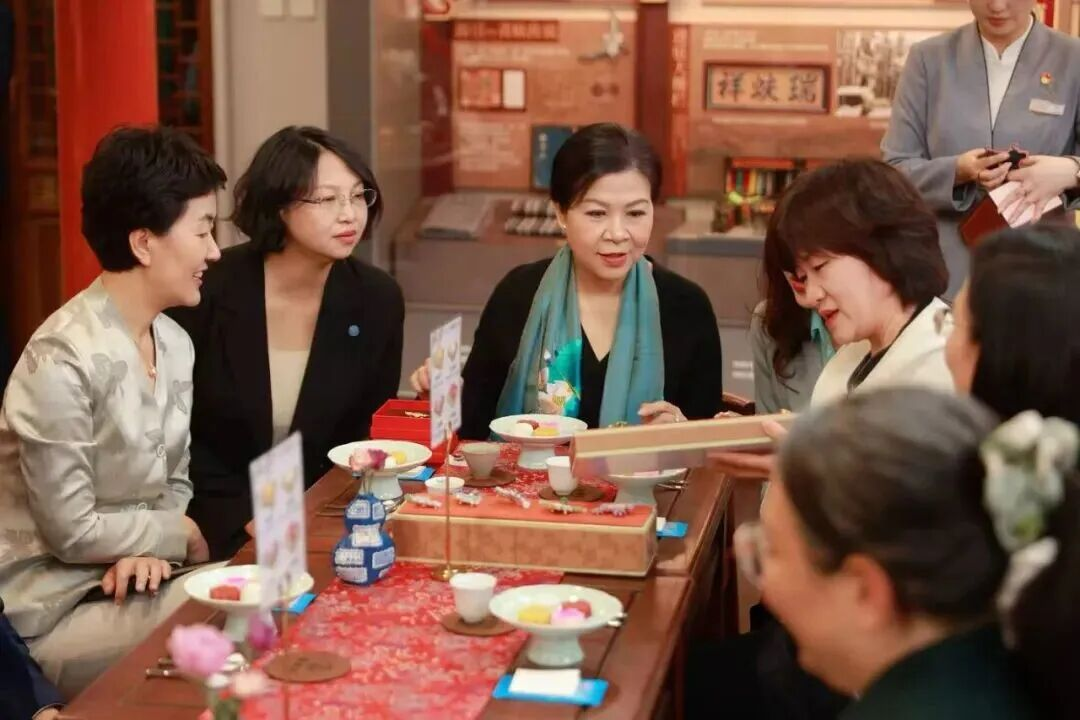
Upon entering the Chinese-style Pavilion, the guests found themselves immersed in a picturesque setting where Jiangnan-style garden scenery intertwined with the ambiance of the Republican era. Multimedia screens presented the history of silk development and the story of how Ruifuxiang produced China’s first Five-Star Red Flag. The guests remarked that this century-old brand not only upholds its time-honored craftsmanship but also carries a sense of responsibility rooted in its revolutionary heritage. During the tea break, traditional Beijing snacks from Huatian Eryouju, including Haitang cake, aiwoiwo (steamed rice cake with sweet stuffing), hawthorn cake, and pea flour cake, delighted the guests with their color, aroma and flavor, demonstrating the profound richness of Chinese culinary culture.
China and Viet Nam are good neighbors, good friends, good comrades and good partners sharing common ideals. In April 2025, Xi Jinping, General Secretary of the Communist Party of China (CPC) Central Committee and President of the PRC, paid a successful state visit to Viet Nam, advancing the building of a China-Viet Nam community with a shared future that carries strategic significance into a new stage of development. After his recent election as President of Viet Nam, General Secretary To Lam chose China as the first country for his overseas visit, fully reflecting the great importance he attaches to the development of relations between the two Parties and the two countries. Beijing’s time-honored brands, with their rich variety, long history and profound cultural heritage, represent a hallmark of Beijing culture. Xicheng District is the birthplace of the Beijing city and the place where the city’s early urban development and establishment as a capital began. It has nurtured numerous time-honored brands that carry forward intangible cultural heritage craftsmanship and cultural memories. Taking these brands as important vehicles, the district actively serves China’s overall diplomacy, promotes friendly exchanges between China and Viet Nam, and contributes to the continued deepening of the China-Viet Nam comprehensive strategic cooperative partnership and the building of a higher-level China-Viet Nam community with a shared future that carries strategic significance.