
In a boat race, those who row the hardest will win. Beijing’s endeavors during the 14th Five-Year Plan period epitomize the strategic vision of strengthening its role as the “four centers”.
This strategic positioning for the capital was personally defined by General Secretary Xi Jinping. Guided by this vision, Beijing has continued its steadfast efforts to provide strong support as the political center, fully demonstrate its appeal as the cultural center, enhance its service capacity as the center for international exchanges, and unleash robust momentum as a center for scientific and technological innovation. The extraordinary achievements of the past five years once again underscore the enduring truth and guiding role of Xi Jinping Thought on Socialism with Chinese Characteristics for a New Era, while highlighting the immense momentum of the “four centers” and “four services”.
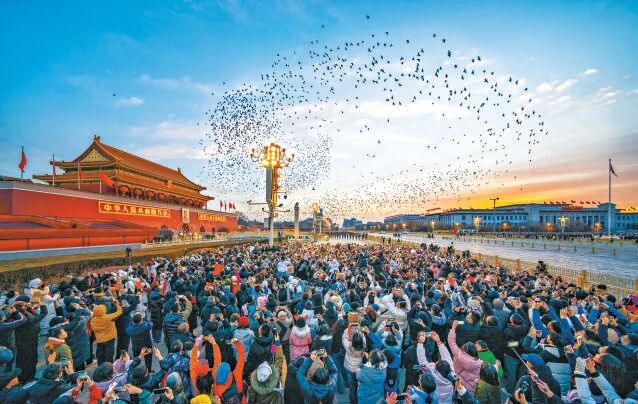
On the first day of 2025, citizens and tourists gathered at Tian’anmen Square to witness the raising of the Five-Star Red Flag (Photo by Zhao Rui)
As the call to action sounds for the journey ahead and Beijing sets its sights on the 15th Five-Year Plan, the city will always bear in mind General Secretary Xi Jinping’s expectations. It will unwaveringly uphold the “four centers” and “four services” as the guiding compass, write splendid chapters in its development as the national capital in the new era, and strive to secure decisive advances in taking the lead to basically achieve socialist modernization.
National Capital in Orderly Operation
In the golden September, Beijing successfully hosted the grand commemoration marking the 80th anniversary of the victory of the Chinese People’s War of Resistance Against Japanese Aggression, an event of national significance and global attention. This national ceremony brought honor to the capital, as Beijing once again delivered impeccable performance in serving the Party and the country’s overarching priorities.
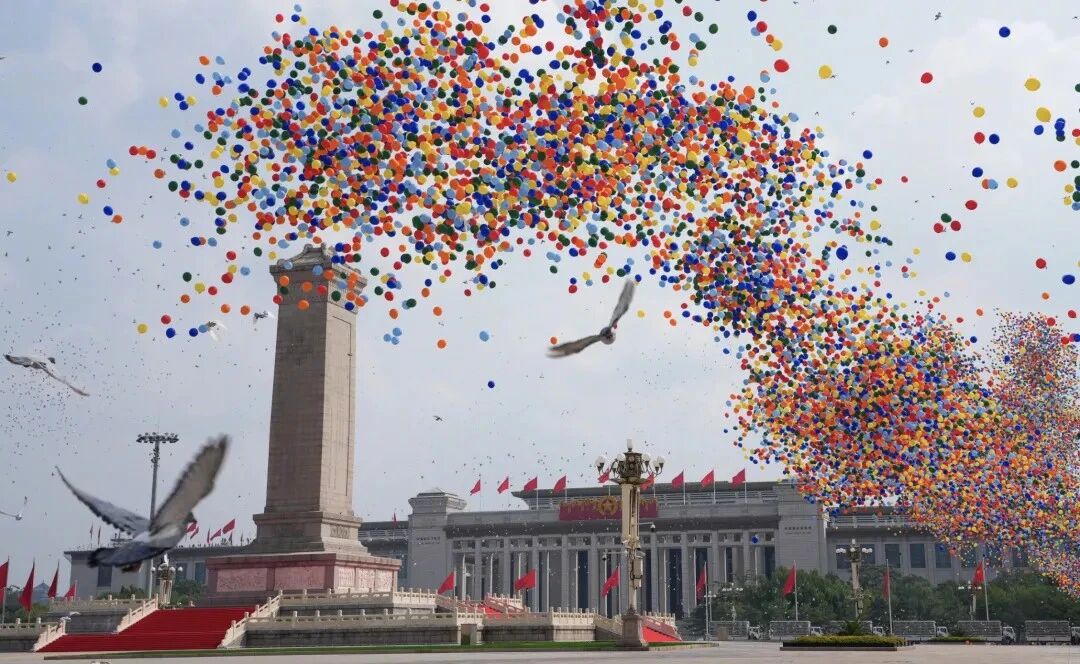
On September 3, 2025, the Commemoration of the 80th Anniversary of the Victory of the Chinese People’s War of Resistance Against Japanese Aggression and the World Anti-Fascist War was held in Beijing, with doves of peace and colorful balloons soaring into the sky (Photo by Xinhua News Agency)
“The primary role of the capital is to serve as the national political center.” Supporting major national events is a core responsibility of the capital. Over the past five years, Beijing has consistently kept the nation’s most fundamental interests at heart, delivering services for major events, including the centenary celebrations of the Communist Party of China (CPC), with the highest standards, strictest requirements, and optimal readiness. The city has also successfully hosted the Winter Olympics, and its mechanisms for supporting major events on a regular basis have been further refined.
General Secretary Xi Jinping has earnestly emphasized that “the implementation of the Master Plan of Development for Beijing (2016-2035) should highlight two key requirements: strengthening Beijing’s role as a political center and putting people first.” Beijing has always prioritized providing services as the nation’s political center, delivering high-quality services to the departments and institutions of the CPC Central Committee, the central government, and the Central Military Commission.
The Capital Planning and Construction Committee Office has organized the compilation of two editions of action plans for the Development Control Plan for the Core Zone Serving Capital Functions, ensuring its implementation to high standards. Beijing continued to improve its ability to support the functions of central authorities, providing government bodies with safer, more efficient, and better-organized services. These efforts have shaped a city landscape with unique historical and contemporary features, one of wider space, lower skyline, displaying the magnificence and solemnity of the city.
“Beijing is judged first and foremost by its political stance.” This principle is fully integrated into all aspects and stages of the capital’s work. Beijing’s role as the national political center has become increasingly prominent, as reflected in the ongoing refinement of mechanisms for thoroughly implementing General Secretary Xi Jinping’s important instructions and the major decisions of the CPC Central Committee. It is also demonstrated in the concrete actions of Party officials who “serve as loyal guardians of the central leadership and safeguard the people’s well-being”, and the awareness of citizens who understand the bigger picture and take national affairs as their own responsibility.
A nation’s capital should lead by example. As a pacesetter on all fronts, Beijing should consistently uphold the highest standards and intensify efforts to lead and set an example. With the goal of taking the lead in basically achieving socialist modernization, Beijing strives to ensure that every aspect of its work advances at the forefront, embodying its mission and responsibility as the national political center.
With lofty aspirations, we keep pressing ahead. On this new journey, Beijing will proactively align its development with the broader cause of Chinese modernization, fully supporting its role as the national political center. The city will strengthen the support systems for central authorities, refine its planning framework and implementation mechanisms, and further enhance its image as the capital of a great nation in pursuit of national rejuvenation.
Ancient Capital with New Vitality: A City Thriving through Culture
The Central Axis runs north-south through the old town of Beijing, with this “Backbone of the City” radiating renewed brilliance in the new era. Traditional operas performed on century-old stages and captivating modern drama presented in contemporary theatres enrich the cultural lives of residents. Among the younger generation, hot-selling creative products like LABUBU have become highly sought-after, fueling the city’s art-toy economy.
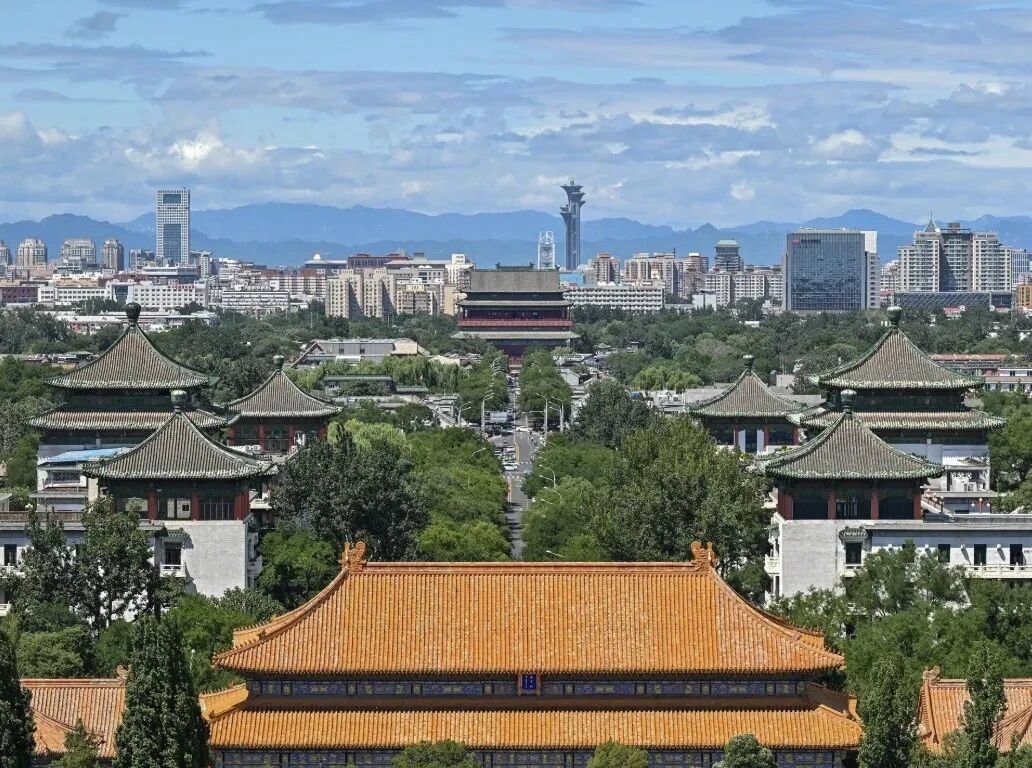
Looking north along the Beijing Central Axis (File photo)
Culture transforms and shapes the spirit of a nation. During the 14th Five-Year Plan period, Beijing, China’s national cultural center, has embraced its new mission in the new era. With firm cultural confidence, it carries forward the city’s historical legacy, upholding fundamental principles and breaking new ground to inject fresh momentum into cultural development. Through openness and inclusiveness, Beijing promotes exchanges and mutual learning among civilizations to build itself into a world-class cultural metropolis where traditional culture and modern civilization shine in harmony.
Upholding Xi Jinping Thought on Socialism with Chinese Characteristics for a New Era to enhance cohesion and forge the Party’s soul, Beijing has advanced the high-quality development of the Beijing Research Center for Xi Jinping Thought on Socialism with Chinese Characteristics for a New Era. The aim is to deepen systematic and theoretical research on the Party’s innovative theories, cementing the ideological foundation for the capital’s development in the new era.
We reinforced the protection of the entire old town as we pursued the UNESCO World Heritage status for the Central Axis. The Great Wall protection and management program has been recognized as a model case by the UNESCO. The 62-kilometer Beijing-Hebei section in the northern stretch of the Beijing-Hangzhou Grand Canal has been opened to navigation for tourism, and major archaeological discoveries have been made at the Liuli River heritage site. These developments continue the millennial cultural lineage of the ancient capital, bringing into sharper focus of Beijing’s distinctive charm as the capital of a great nation, an ancient capital and a great cosmopolis.
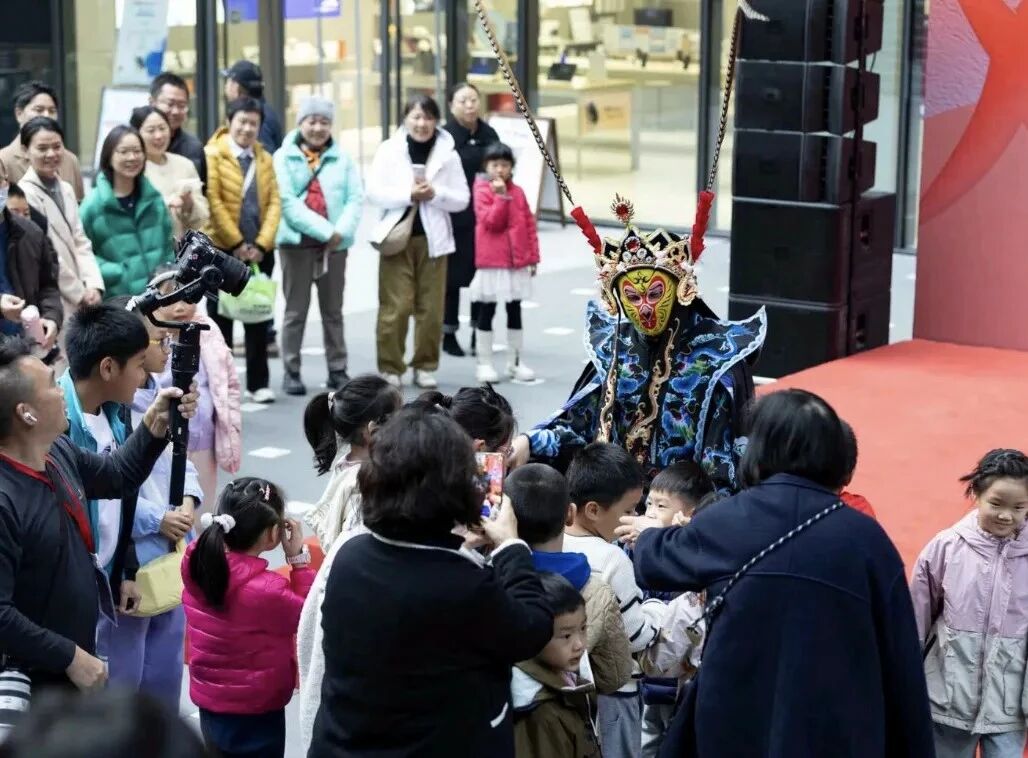
Lao She Theater Festival comes to Dajixiang as Beijing establishes itself as a capital of performing arts (File photo)
We redoubled efforts to build Beijing into a capital of performing arts, a city of museums, and a city of readers, infusing culture into the city’s fabric and nourishing the spiritual life of its residents. In 2024, Beijing hosted 57,000 commercial performances, attracting more than 12.8 million attendees, both record highs. Culture permeates silently, touching hearts and minds. Beijing is committed to becoming an exemplary city of social conduct and moral integrity, where the inspiration of role models and the everyday kindness of ordinary people together inspire the society to pursue excellence and greater virtue.
Culture is not only a source of soft power but also a driver of productivity. The integration of technology and culture has fostered new industries such as the UHD audiovisual sector. The coordinated development of culture, commerce, tourism, sports, and exhibitions has brought fresh experiences like traveling for film locations, concerts, and sporting events. Keeping pace with emerging consumption trends, art toys continue to captivate young people both at home and abroad. The added value of the cultural industry now accounts for 11.4% of Beijing’s GDP, offering vivid proof of culture-driven development in the capital.
Those who strive will succeed; those who persevere will reach their destination. As the 15th Five-Year Plan outlines a new blueprint for development, the journey toward its goals calls for even stronger cultural strengths. Beijing shoulders significant responsibilities to fully enhance its influence as a national cultural center, further strengthen the protection of the historic and cultural sites in Beijing, foster a vibrant cultural ecosystem, and build a capital of advanced socialist culture with Chinese characteristics.
Embodying a Major-Country Vision and Connecting the World
By the shores of Yanqi Lake, the Beijing Yanqi Lake International Conference Resort, where the 2014 Asia-Pacific Economic Cooperation (APEC) summit was held, stands poised like a soaring swan goose, awaiting guests from around the world. Now open to visitors, the newly completed Capital International Exhibition & Convention Center features flowing curves like a ribbon of time, bridging Beijing’s past and future as a hub of international exchanges.
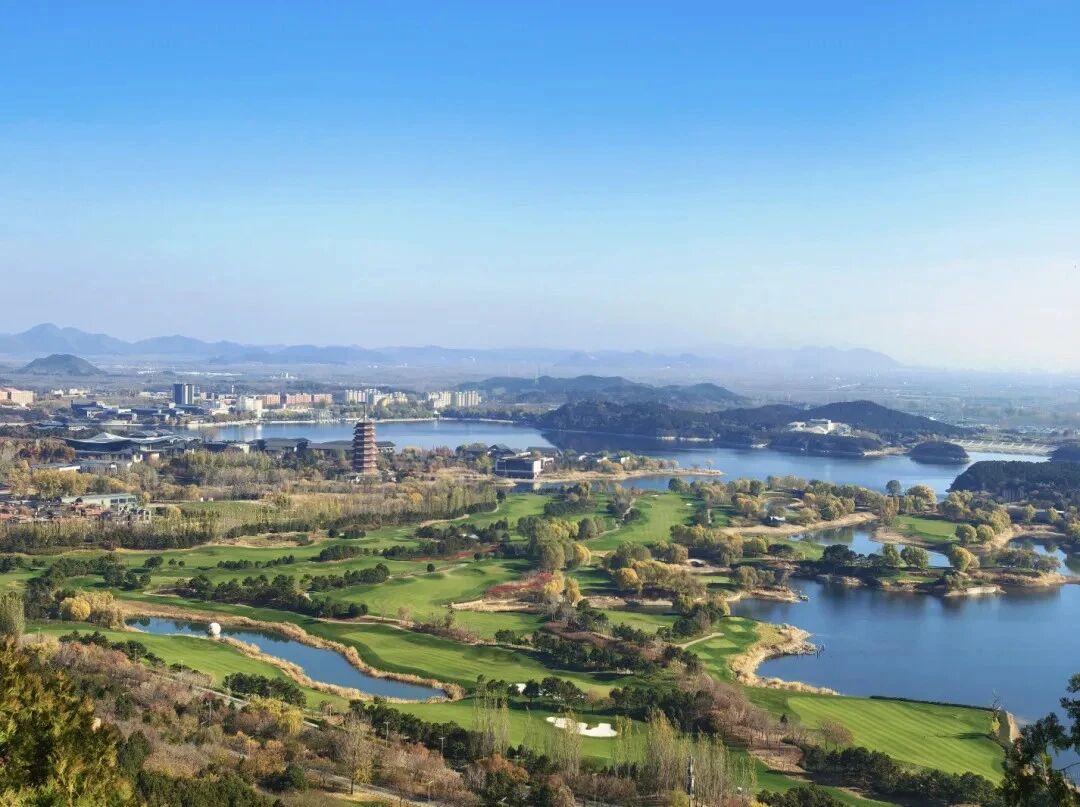
Autumn scenery at Yanqi Lake (File photo)
How do we measure a city’s international influence? The answer may lie in the following numbers. According to the newly released International Exchange Centers Index 2025, Beijing ranks sixth worldwide and has remained the top among participating Chinese cities for three consecutive years. Behind these achievements are the planning and construction of 78 facilities serving international exchanges, the establishment of 37 new international organizations, and the presence of more than 8,000 new foreign-funded enterprises. Above all, they reflect the city’s open and inclusive nature.
During the 14th Five-Year Plan period, Beijing achieved a remarkable leap in expanding and deepening its role as the national center for international exchanges, making new contributions to the building of a community with a shared future for humanity, to the country’s overall diplomatic efforts, and to the capital’s own high-quality development. Here, the world sees a China that is more open, inclusive, and confident.
Over the past five years, Beijing has fully supported the Party and the country’s overarching diplomatic agenda, successfully hosting 15 diplomatic events and major national events. A standardized service system encompassing protocol, security, and cultural presentation has steadily taken shape. Meanwhile, 456 designated “Visit Beijing” sites allow international guests, whether enjoying tea on a boat ride or admiring panoramic views of the city, to experience firsthand the vitality of China’s development.
National-level platforms, such as the China International Fair for Trade in Services (CIFTIS), the ZGC Forum, the Financial Street Forum, and the Beijing Culture Forum, bring together global expertise, with every meeting of minds and hands serving as a testament to the building of a community with a shared future for humanity.
The Beijing Yanqi Lake International Conference Resort continues to expand and upgrade; the new international reception hall along the Central Axis has opened; and three cultural landmarks in the Beijing Municipal Administrative Center (BMC) have emerged as prominent venues for international cultural events. This increasingly refined spatial layout of facilities for international exchange allows the ancient capital’s historic charm to seamlessly resonate with its international appeal.
Beijing is polishing the finer points of its international services by introducing the “BEIJING PASS” all-in-one card, accepting five major international bank cards for tap-and-go subway entry, and expanding the 12345 hotline to eight languages. Such thoughtful touches ensure that the warmth of the city’s hospitality is felt not only in the sweep of major events, but also in the subtle moments of everyday interactions.
Amid surging tides, we sail forth with full force. The call to strive toward the goals of the 15th Five-Year Plan has already sounded. As the world’s attention turns once again to Beijing, this city, rooted in millennia of cultural heritage yet brimming with modern dynamism, will proactively build an urban service system aligned with international standards and fully support the country’s overall diplomacy. With a more open and inclusive mind, Beijing is poised to write a new chapter on the global stage as the capital of a major nation.
Pioneering the Future Through Innovation
On the global map of sci-tech innovation, the city is rapidly redefining its position with remarkable momentum.
Beijing ranks first nationwide in high-value invention patents per 10,000 people, registers more than 300 new tech enterprises each day, and leads the country in both the number of national high-tech enterprises and “little giants”. Throughout the 14th Five-Year Plan period, these dynamic figures capture the strong momentum driving Beijing’s rise as an international center for sci-tech innovation.
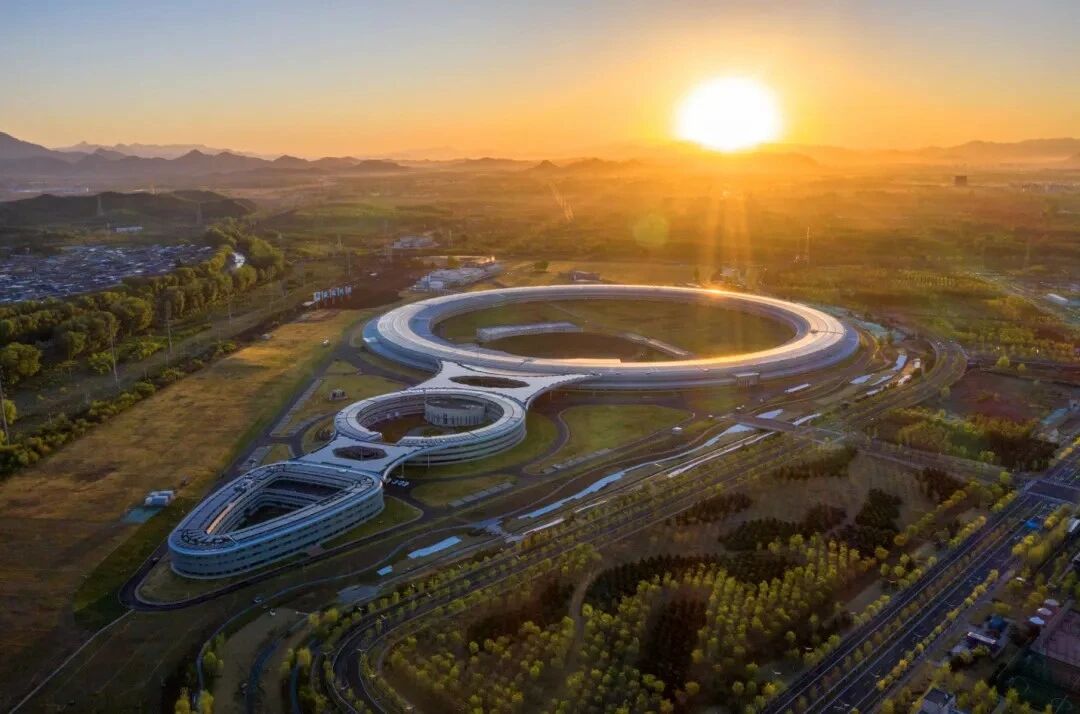
The High Energy Photon Source (HEPS) facility at Huairou Science City (Photo by Bu Xiangdong, file photo)
Building an international center for sci-tech innovation is an honorable mission and a major responsibility entrusted to Beijing by the CPC Central Committee with Comrade Xi Jinping at its core. In fulfilling this mission, Beijing is committed to advancing innovation-driven development and other major national strategies. The aim is to build the city into a higher-standard international innovation center, a global science hub, and an innovation powerhouse.
Over the past five years, Beijing has achieved a series of systemic breakthroughs in its capacity to generate sci-tech innovation. Huairou Science City has emerged as a powerhouse of national strategic scientific innovation, with leading concentration of cutting-edge scientific facilities in the world. New-type research institutions and national key laboratories function as powerful “innovation magnets”, attracting top global talent to tackle critical challenges. Other breakthroughs include AI-enabled optical chips and the boundary-pushing “Beinao-2” brain-computer interface (BCI) system. These world-class original innovations are accelerating Beijing’s transformation into a major source of sci-tech innovations.
Over the past five years, Beijing has seen a deep integration of innovation momentum with industrial upgrading. Keenly attuned to the new round of sci-tech revolution and industrial transformation, the city has consolidated and enhanced its leading strengths in trillion-yuan industrial clusters such as next-generation information technology, biomedicine, and other key industries. Efforts have also been made to strategically chart new tracks in future-oriented industries, including artificial intelligence and commercial aerospace. The added value of high-tech industries and the digital economy has each grown by more than 50%, illustrating how Beijing is turning innovation into a driver of high-quality development.
These five years have also marked a comprehensive reshaping of Beijing’s innovation ecosystem and spatial layout. The Regulations on Building Beijing into an International Innovation Center has established a solid legal foundation for innovation. The “three science cities and one demonstration area” have evolved into a strategic ecosystem characterized by complementary functions and deep integration. Talent hubs continue to attract high-caliber professionals, while 100-billion-yuan investment funds provide targeted support, together fostering an innovation ecosystem that delights those nearby and draws talent from afar.
The journey ahead is long, and progress depends on unwavering effort. Looking toward the 15th Five-Year Plan period, Beijing will advance with greater vigor, setting sights on the global frontiers of science and technology, national economic development, major needs of the country, and the health and safety of the people. The city will cultivate world-class universities, research institutions, enterprises, and talent hubs, scaling up its capacity as an international innovation center. In doing so, Beijing will make even greater contributions to building China into a strong country in science and technology and advancing national rejuvenation.