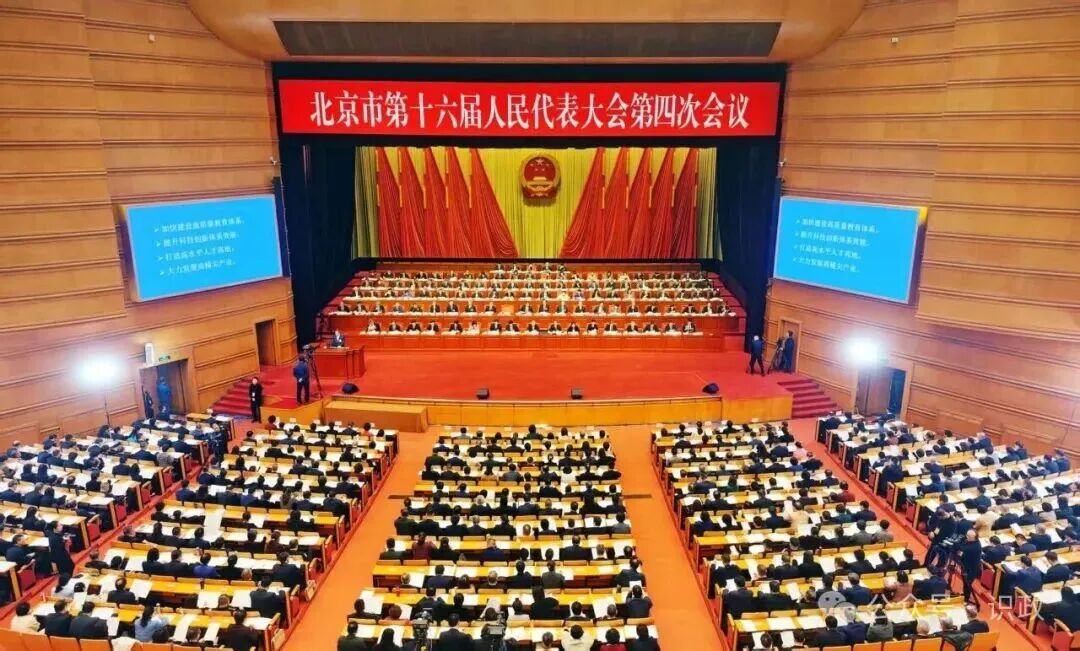
On the morning of January 25, the Fourth Session of the 16th Beijing Municipal People’s Congress opened at the Beijing Conference Center.
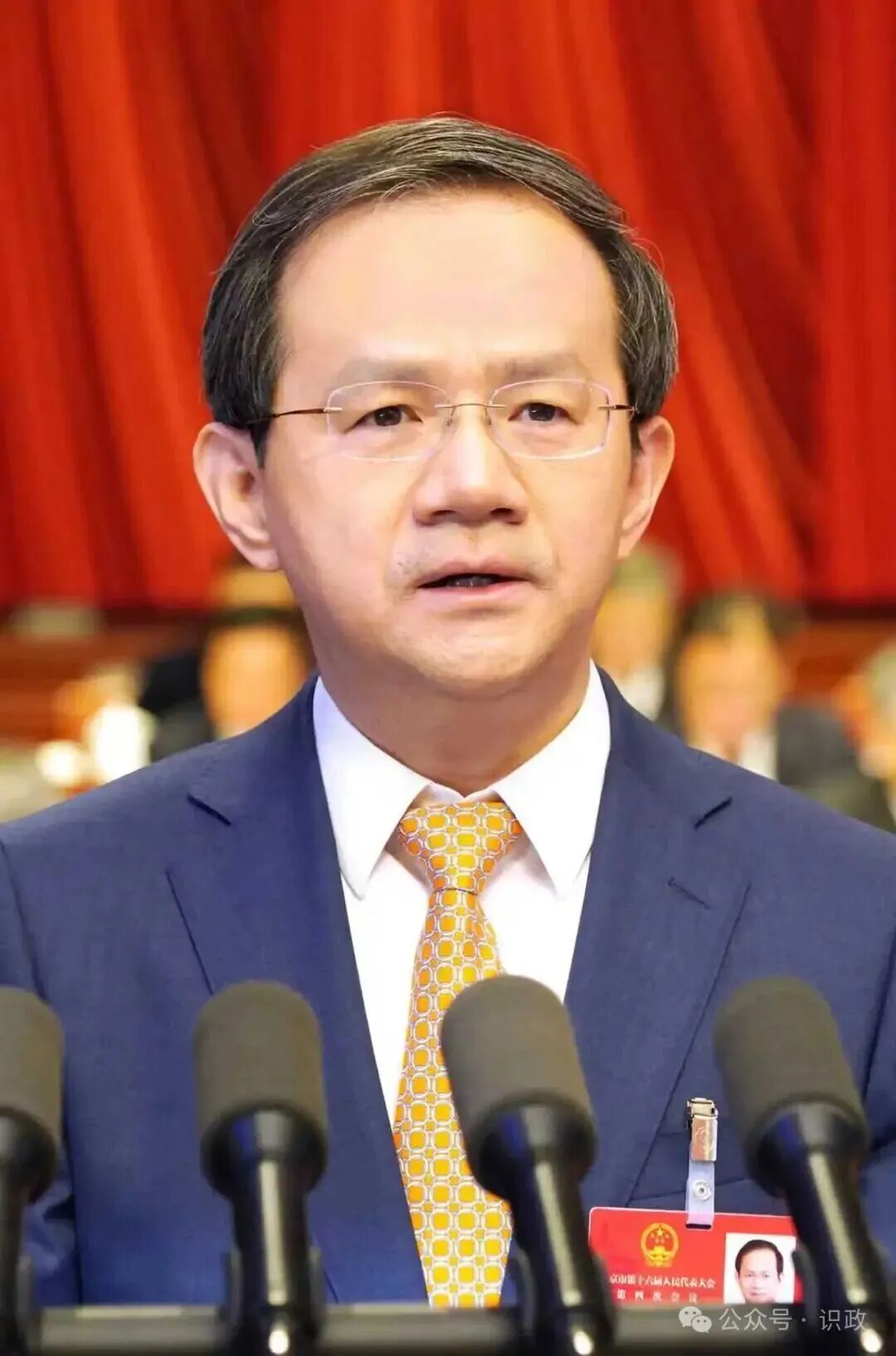
Li Xiuling, Executive Chairman of the Presidium and Executive Chairman of the Congress, presided over the meeting. Yin Yong, Mayor of Beijing, delivered a report on the work of the government. Yin Li, Member of the Political Bureau of the CPC Central Committee and Secretary of the CPC Beijing Municipal Committee; and You Jun, Deputy Secretary of the CPC Beijing Municipal Committee, attended the meeting.
Executive Chairs of the meeting, Yin Li, Li Xiuling, You Jun, Qi Jing, Pang Lijuan, Hou Junshu, Yu Jun, Wang Xu, Wang Yanqing, Ren Wujun, Liu Zhen, Xiao Zhigang, Zhao Yuying, Gao Feng, and Fu Dapeng, were seated in the front row of the rostrum.
Liu Qi, former Member of the Political Bureau of the CPC Central Committee and former Secretary of the CPC Beijing Municipal Committee; Guo Jinlong, former Member of the Political Bureau of the CPC Central Committee and former Secretary of the CPC Beijing Municipal Committee; Du Deyin and Li Wei, former Chairmen of the Standing Committee of the Beijing Municipal People’s Congress; and Deng Rongling, Deputy Secretary-General of the Standing Committee of the National People’s Congress, attended the meeting by invitation.
Yin Yong’s report is divided into three parts: a review of the government’s work in 2025; development achievements during the 14th Five-Year Plan period, and the main goals and tasks for the 15th Five-Year Plan period; and major tasks for work in 2026.
Yin stated that 2025 marks the conclusion of the 14th Five-Year Plan period. Over the past year, we have been working under the strong leadership of the CPC Central Committee with Comrade Xi Jinping at its core, and the direct leadership of the CPC Beijing Municipal Committee. We have also received support and supervision from the Beijing Municipal People’s Congress and its standing committee. Guided by Xi Jinping Thought on Socialism with Chinese Characteristics for a New Era, we have implemented the guiding principles established at the 20th CPC National Congress and the plenary sessions of the 20th CPC Central Committee. In alignment with General Secretary Xi’s directives on Beijing’s development, we have concentrated on bolstering Beijing’s position as the Four Centers and improving our ability to provide the Four Services. We have incorporated the Five KeyInitiatives into the new development patternand ensured both development and security. Despite mounting pressure, Beijing’s economy has remained resilient and is advancing toward innovation-driven and higher-quality development. Overall social stability has been maintained. We have successfully fulfilled the targets and tasks set at the third session of the 16th Municipal People’s Congress.
Yin stressed that, over the past year, we continued to strengthen Beijing’s core functions as the national capital, and delivered high-quality services for the event commemorating the 80th anniversary of the victory in the Chinese People’s War of Resistance Against Japanese Aggression and the World Anti-Fascist War. We improved our ability to support the functions of central authorities, and continued to implement a range of measures to relieve Beijing of functions nonessential for the capital, improve the environment comprehensively, and elevate overall urban quality. We provided full support for the development of the Xiong’an New Area, advanced the development of the Beijing Municipal Administrative Center (BMC) to high standards, and deepened coordinated development in key areas of the Beijing-Tianjin-Hebei region. By accelerating technological innovation to drive the development of new quality productive forces, Beijing continued to enhance its capacity as an international center for sci-tech innovation, advance high-end, precision, and cutting-edge industries, and expedite efforts to become a global leader in the digital economy. The city also promoted the growth of future-oriented industries and intensified efforts to develop modern services. Reform and opening up have been further deepened, with reforms in key sectors achieving tangible results. We continued to improve the world-class business environment, advance the all-round development of the Two Zones, and optimize new supply while expanding new demand. Significant progress has been made in building a beautiful Beijing, through implementing the “Every 0.1 Microgram Counts” initiative, improving water and soil pollution control, and developing Beijing into a garden city. Urban-rural and regional coordinated development has been strengthened, with deepened efforts in urban renewal projects. We advanced the renewed 100+1,000 village program in successive phases, accelerated development in key regions, and strengthened comprehensive management of the city’s transport system. Public well-being was consistently enhanced through employment-first policies, dedicated advancement of educational reform, steady progress in the Healthy Beijing initiative, strengthened social security, and flourishing cultural development in the capital. Safety and security were effectively maintained in Beijing and we continued to advance reform to ensure prompt responses to public complaints. Despite these achievements, we must be acutely aware of the problems and shortcomings in our work, and redouble our efforts to make improvements to live up to the public’s expectations.
Yin highlighted that the 14th Five-Year Plan period was an extraordinary five years. During this time, we kept firmly in mind the entrusted mission and steadfastly followed the blueprint, continuously enhancing our roles as the Four Centers. By forging ahead with reform and innovation, we achieved notable progress in high-quality economic development. Through the preservation and inheritance of cultural heritage, the cultural soft power and influence of the capital have been steadily enhanced. Through systematic governance and persistent efforts in pollution prevention and control, Beijing continued to make solid progress in green development. By putting people first and adopting targeted measures, the fruits of modernization have increasingly benefited the people. The 15th Five-Year Plan period is critical for reinforcing the foundations and pushing ahead on all fronts toward the goal of basically achieving socialist modernization. During this time, China will face both strategic opportunities and risks and challenges. As the nation’s capital, Beijing holds immense development potential, embedded in its roles as “four centers” and provision of Four Services. The coordinated development in the Beijing-Tianjin-Hebei region has opened up vast space for growth. Technological innovation continues to unleash powerful momentum, while reform and opening up keep generating fresh dividends for development. The capital enjoys broad prospects and great potential in its development in the new era. We must maintain strategic focus, strengthen our confidence in success, and address external challenges by building internal strength, thus continuing to make breakthroughs across all areas of the capital’s development.
Yin highlighted that this year marks the beginning of the 15th Five-Year Plan and it is vital for the government to fulfill its tasks effectively. To achieve this, we must: follow the guidance of Xi Jinping Thought on Socialism with Chinese Characteristics for a New Era; implement the guiding principles established at the 20th CPC National Congress and the plenary sessions of the 20th CPC Central Committee; act on the guidelines of the Central Economic Work Conference; adhere to General Secretary Xi Jinping’s instructions on Beijing’s development; fully and faithfullyimplement the new development philosophy on all fronts; actively contribute to and integrate into the new development pattern; advance high-quality development through solid actions; uphold the general principle of pursuing progress while ensuring steady performance; ensure both development and security; pursue the development of Beijing as the capital in the new era; promote coordinated development in the Beijing-Tianjin-Hebei region; leverage advantages in education, science and technology, and human resources; continuously expand domestic demand and optimize supply; optimize the allocation of new resources while making best use of existing ones; speed up the development of new quality productive forces; actively contribute to and integrate into the development of a unified national market; prevent and defuse risks in key areas; keep employment, enterprises, markets, and expectations stable; promote higher-quality economic growth while achieving an appropriate increase in economic output; maintain social harmony and stability in the capital; advance comprehensive and rigorous self-governance of the Party. With these efforts, Beijing aimsto get the 15th Five-Year Plan off to a strong start.
Yin stated that the main targets for economic and social development this year are as follows: grow GRP by around 5%; increase the general public budget revenue by around 4%; maintain the surveyed urban unemployment rate below 5%; keep CPI increase at around 2%; ensure personal income growth align with economic growth; contain the annual average concentration of fine particulate matter (PM2.5) at around 29 μg/m3, while striving for even better results; meet national standards for energy, water and carbon emissions indicators.
Yin stated that in 2026, we must prioritize our efforts in the following tenaspects: further implementing the Master Plan of Development for Beijing (2016-2035) and striving for solid progress in Beijing-Tianjin-Hebei coordinated development; strengthening the role of domestic demand as a primary driver and consolidating and building on the momentum of economic stability and growth; integrating the development of education, science and technology, and human resources to foster a competitive framework for fostering new quality productive forces; advancing in-depth reform and high-standard opening up to enhance the momentum and vitality of high-quality development; increasing and diversifying the supply of high-quality cultural products and services and strengthening the influence of Beijing as the national cultural center; accelerating the transformation of the super-large city development model and advancing precision governance; modernizing agricultural and rural areas and promoting the coordinated development of urban and rural areas and regional development; improving the supply of public services and tackling matters that directly impact people’s daily lives and for which they feel a genuine, personal concern; promoting coordinated efforts to reduce pollution, cut carbon emissions, and expand green development to build a beautiful Beijing characterized by harmony between humanity and nature; fostering a resilient city in all aspects and fortifying the capital’s safety shield. To this end, we must build a stronger government to provide more effective and higher-quality governance.
The meeting reviewed the draft plan of Beijing’s 15th Five-Year Plan for national economic and social development, as well as reports from the Beijing Municipal People’s Government, including the report on the implementation of the 2025 plan for national economic and social development and on the 2026 draft plan for national economic and social development, and report on the execution of the budgets for 2025 and on the draft budgets for 2026. The meeting also adopted theElection Method for the Fourth Session of the 16th Beijing Municipal People’s Congress and the Voting Method for the Selection of Chairpersons of Relevant Special Committees of the 16th Beijing Municipal People’s Congress at its Fourth Session.
Also present as nonvoting delegates were all members attending the Fourth Session of the 14th CPPCC Beijing Municipal Committee; some deputies of the Beijing delegation to the 14th National People’s Congress; as well as officials from relevant national authorities, departments, and organizations in Beijing.